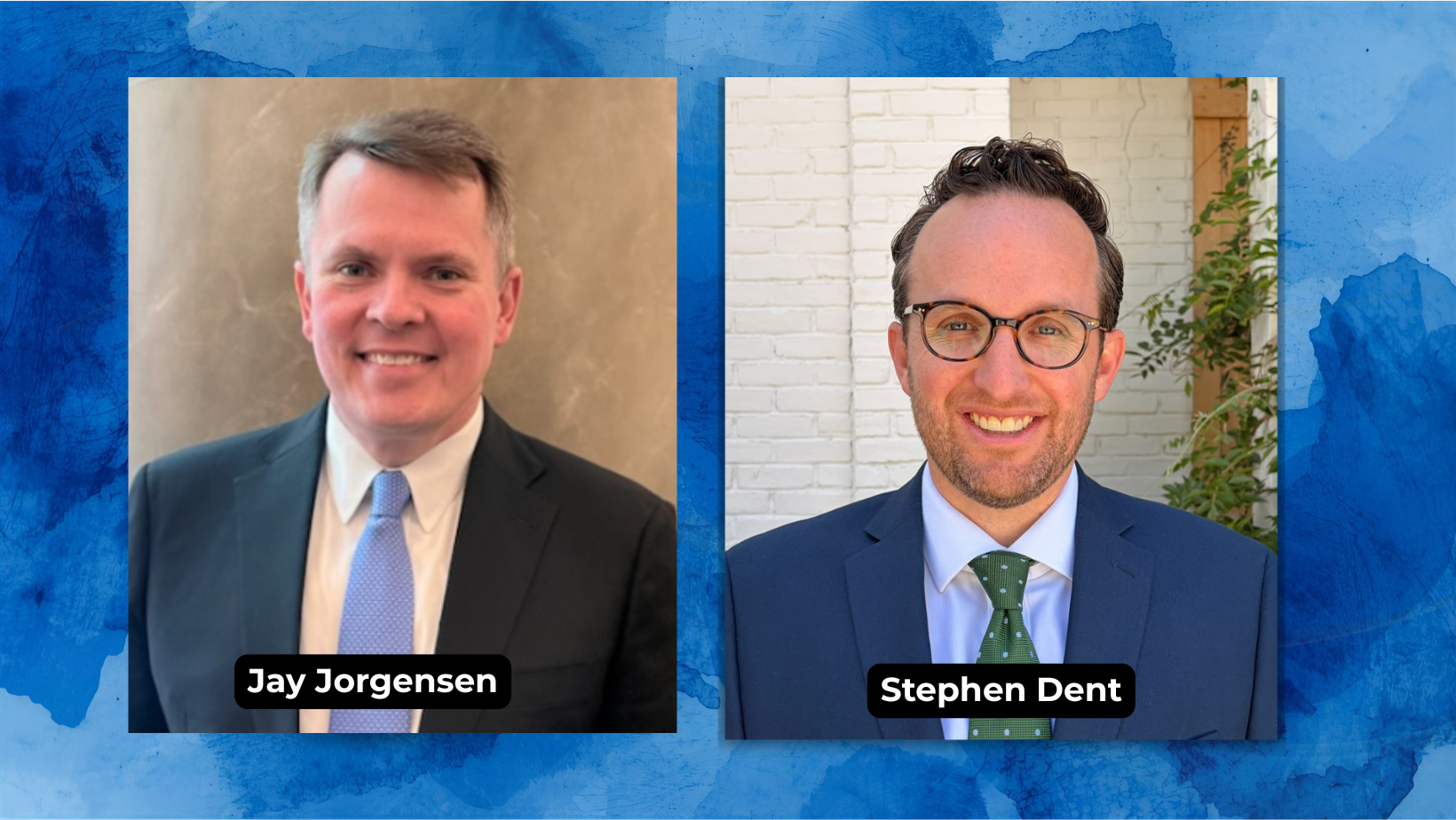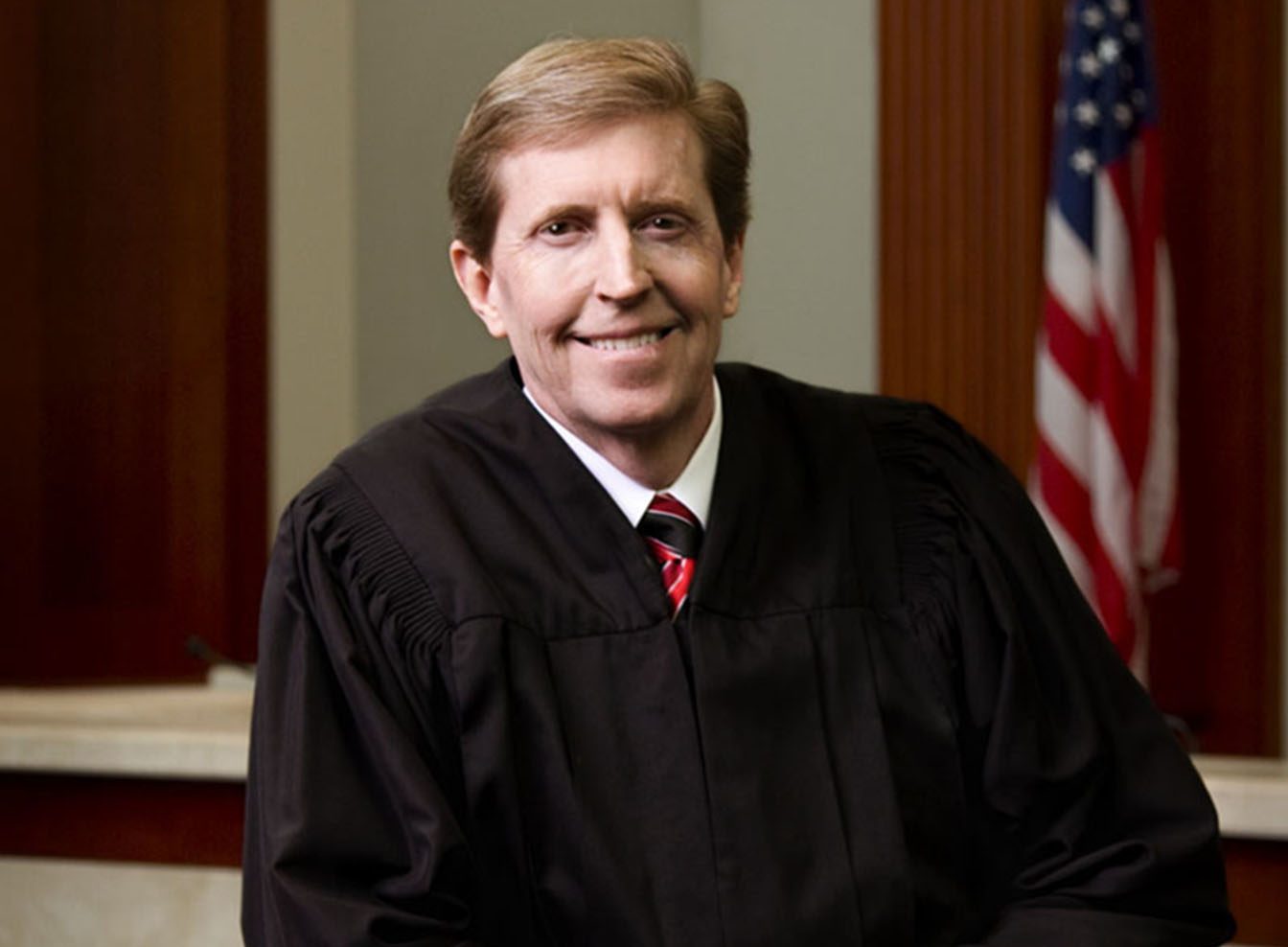
SALT LAKE CITY (Oct. 14, 2025) — Gov. Spencer J. Cox announced the appointment of Judge John Nielsen to serve as the next justice of the Utah Supreme Court, filling the vacancy created by the pending retirement of Justice John A. Pearce. Justice Pearce’s last day on the Court is December 1.
After extensive interviews and a review of written work and case records, the governor selected Judge Nielsen, a respected expert in appellate and constitutional law with experience as an Assistant Solicitor General, service as a judge on Utah’s Third District Court, and roles teaching appellate practice at Brigham Young University and the University of Utah law schools.
“Utah’s Constitution established a merit-based system that puts qualifications, character, and independence above politics,” Gov. Cox said. “After a rigorous review, Judge Nielsen stood out for his legal reasoning, clarity, and deep respect for the proper role of the judiciary. I am confident he will apply the law faithfully and serve the people of Utah with integrity and humility.”
“I am deeply humbled and beyond honored to be nominated for the Utah Supreme Court,” Judge Nielsen said. “I have great respect for the court as an institution and for each justice. Should I be confirmed, I would relish working with them and serving the people of Utah. I love our state and our judicial branch, and I am grateful for the prospect of serving in this new role.”
Under the Utah Constitution, the appointment now goes to the Utah Senate for consent. The Senate Judicial Confirmation Committee will review Judge Nielsen’s record and hold a confirmation hearing prior to a vote of the full Senate.
SALT LAKE CITY (Nov. 12, 2025) – The Third District Judicial Nominating Commission has selected nominees for a vacancy on the Third District Court. This position results from the retirement of Judge Mark Kouris, effective February 1, 2026.
The nominees for the vacancy are:
S. Grace Acosta, Owner/Partner, Trujillo Acosta Law;
Joel Ferre, Assistant United States Attorney, United States Attorney’s Office;
Patricia Kuendig, Attorney/Owner, Dodd & Kuendig;
Todd Olsen, Commissioner, Third District Court;
Lance Talakai, Team Leader, Salt Lake Legal Defender Association.
Written comments can be submitted to the Third District Judicial Nominating Commission at judicialvacancies@utah.gov or Commission on Criminal and Juvenile Justice, P.O. Box 142330, Salt Lake City, UT 84114-2330. The deadline for written comments is noon, Nov. 22, 2025.
The Nominating Commission may request further information or conduct an investigation of the nominees after reviewing public comments. After the public comment period, the names will be sent to Gov. Spencer J. Cox, who will have 30 days to make an appointment. Gov. Cox’s appointee is subject to confirmation by the Utah Senate.
On October 8, 2025, the U.S. Bankruptcy Court for the District of Utah issued General Order 25-001 in response to the federal funding lapse that began at midnight on September 30, 2025. The order addresses how the shutdown affects cases and adversary proceedings involving United States agencies, departments, and instrumentalities that appear before the Bankruptcy Court, defined collectively as “Affected Entities,” which include the U.S. Trustee’s Office and the U.S. Attorney’s Office for the District of Utah.
Big Picture
Cases keep moving. Bankruptcy cases in Utah are not automatically stayed just because an Affected Entity is involved. However, the Court may continue (postpone) contested matters involving Affected Entities on a case-by-case basis. Parties that are not Affected Entities must comply with all orders, laws, deadlines, and hearings as usual, including timely responding to any papers filed by Affected Entities.
Adversary proceedings with Affected Entities are paused. All adversary proceedings in which an Affected Entity is a party are stayed until an “End Stay Date” the Court will set after funding is restored. Deadlines in those adversaries are extended to the later of 21 days after the End Stay Date or 21 days after the original deadline.
You can still sue and serve Affected Entities. The order does not prohibit debtors or other parties from filing motions or objections, or even initiating new adversary proceedings against Affected Entities, and service can proceed under Rule 7004. Importantly, any deadlines to file motions or objections or initiate adversary proceedings against Affected Entities are not extended.
Deadlines & Extensions
As stated above, deadlines in adversary proceedings involving Affected Entities are extended to the later of 21 days after the End Stay Date or 21 days after the original deadline.
For obligations that require an Affected Entity to take affirmative action in a bankruptcy case (e.g., filing proofs of claim, administrative expense requests, or objections to fee applications in chapter 11), any deadlines falling on or after October 1, 2025, are likewise extended to the later of:
21 days after the End Stay Date, or
21 days after the original deadline.
These grace periods do not apply to debtors, creditors, or other non-affected parties. Your deadlines remain in force.
Money Still Must Flow
The order does not alter, vacate, or stay payment obligations owed to Affected Entities, including:
Quarterly U.S. Trustee fees in chapter 11 under 28 U.S.C. § 1930(a)(6);
Plan disbursements in chapters 11 and 13; and
Chapter 7 disbursements required by the Bankruptcy Code.
How the “End Stay Date” Will Be Set
Once funding is restored, at least one Affected Entity must file a notice with the Court.. The Court will then enter a follow-up order establishing the End Stay Date, after which parties will be able to calculate the precise date to which deadlines are extended under the provisions described above.
Ability to Seek Relief
Any party in interest may move to modify or obtain relief from General Order 25-001 if circumstances warrant.
Practical Takeaways
Debtors and private parties: Assume business as usual for your filings, appearances, and deadlines. Don’t miss hearings or due dates. Continue to respond timely to papers filed by Affected Entities in bankruptcy cases.
When the U.S. Trustee or other federal party must act: Expect deadline extensions, but plan for hearings to be continued rather than automatically stayed (except adversaries, which are stayed).
Fees and plan payments: Keep paying — shutdown or not.
General Order 25-001 balances statutory limits on federal employee work during a shutdown with the need to keep bankruptcy administration on track. Until the Court sets an End Stay Date, practitioners should meet all non-government deadlines, continue making required payments, and anticipate extensions where an Affected Entity would otherwise need to act.
Source: U.S. Bankruptcy Court for the District of Utah, General Order 25-001 (filed Oct. 8, 2025).
At a celebratory admissions ceremony held at The Grand Theatre at Salt Lake Community College, nearly 500 attendees gathered to witness the swearing-in of Utah’s newest attorneys and five Licensed Paralegal Practitioners (LPPs). The event, October 7, 2025, 12:00 p.m., marked a milestone for the new legal professionals and their families as they officially joined the ranks of the Utah State Bar.
Chief Justice Matthew Durrant: A Call to Stewardship and Justice
The ceremony began with a welcome from Chief Justice Matthew Durrant of the Utah Supreme Court, who congratulated the new attorneys and LPPs for their “diligence, perseverance, intellect, and hard work.” He reminded them that they now hold the tools to shape society and advance justice, describing it as both a privilege and a profound responsibility. Durrant also acknowledged the support of families and friends who helped make this moment possible and encouraged the new professionals never to forget their duty to protect the rule of law.
Justice Jill Pohlman: Lessons from the Silver Screen
Following the Chief Justice’s remarks, Justice Jill Pohlman offered a heartfelt and entertaining speech, noting that next year will mark her 30th anniversary as a member of the Utah State Bar. She reflected on the ever-changing nature of the legal profession, reminding the new admittees that even decades of study and experience can’t reveal everything in a world and society that continually evolves.
Pohlman then shared 10 pieces of advice, each inspired by famous movie lines. From Casablanca’s “I think this is the beginning of a beautiful friendship,” emphasizing the importance of relationships, to Yoda’s Star Wars wisdom, “Do or do not. There is no try,” she encouraged new attorneys to believe in their abilities and embrace challenges.
She shared a personal story of her early days as a young attorney, when a managing partner unexpectedly assigned her to represent a high-profile client. Though she was nervous and inexperienced, she rose to the occasion and succeeded, which was proof, she said, that “you are more capable than you think.”
Her other pieces of advice included Finding Nemo’s “Just keep swimming” to remind the audience to persevere through setbacks, and Spiderman’s message of being a “force for good.” She closed by urging the new attorneys to “do work that gives you purpose” and never lose sight of their dreams.
Alex Vandiver: Welcoming New Attorneys to the Young Lawyers Division
Next, Alex Vandiver, President of the Utah Young Lawyers Division (YLD), welcomed the new attorneys, who automatically become members of the Division upon admission. She described YLD’s mission and highlighted its impactful Wills for Heroes program, which provides free wills and estate planning services for first responders and veterans. Vandiver shared the goal of hosting five such events in the coming year and encouraged the attorneys to volunteer and get involved.
She also announced two upcoming networking events: the Winter Gala on November 14 at the Loveland Living Planet Aquarium, and the Spring Social. Vandiver invited new members to follow the YLD on Instagram and read quarterly updates to “grow, connect, and meet colleagues who become life-long friends.”
Kim Cordova and Tyler Young: Motion for Admission
The Motion for Admission was presented by Kim Cordova, President of the Utah State Bar Board of Bar Commissioners, and Tyler Young, President-Elect. Cordova shared the fascinating origin of the phrase “passing the bar,” tracing it back to medieval European courtrooms, where physical barriers—literal bars—separated the public from legal professionals. Over time, the phrase came to represent both admissions to practice law and the collective body of attorneys.
Cordova called the new attorneys and LPPs “guardians and protectors of the law,” and expressed her honor in presenting the motion for their admission. Together, Cordova and Young read aloud the names of 215 attorneys present for the ceremony.
Nicole Gray: Administration of Oaths and Closing
Finally, Nicole Gray, Clerk of Court for the Utah Supreme Court, administered both the Licensed Paralegal Practitioner Oath and the Attorney Oath. As the newly sworn-in professionals affirmed their commitment to ethical practice and the pursuit of justice, the auditorium filled with applause, cheers, and smiles, marking the joyful close of a momentous day in Utah’s legal community.
On October 3rd, the Utah Law & Justice Center buzzed with energy as more than 100 attorneys, advocates, nonprofit leaders, and service providers came together for the 7th Annual Access to Justice Summit. Organized by the Utah State Bar Access to Justice Office, the day-long event created space for reflection, collaboration, and renewed commitment to ensuring equal access to justice across the state.
Setting the Tone: Connection, Strength, and Impact
The Summit opened with a keynote by Amy Sorenson, partner at Snell & Wilmer and Co-Chair of the Access to Justice Commission. Sorenson framed her remarks around the Summit’s theme: “Moving Forward Together: Connection, Strength, Impact.” Drawing on both personal experiences and lessons from disaster response, she reminded attendees that even in times of loss and uncertainty, purpose and hope remain powerful guiding forces.
Sorenson emphasized a simple yet profound idea, quoting Professor Rosabeth Moss Kanter of Harvard Business School: “The most radical thing you can do is introduce people to one another.”
That sentiment, Sorenson explained, captures the very spirit of the Summit—building bridges between legal aid organizations, private firms, community groups, and the individuals they serve.
Facing Today’s Challenges Head-On
While the Summit was a celebration of progress, Sorenson acknowledged the realities confronting the access to justice community: reduced government funding, an overwhelming rise in client needs, and increasing legal barriers, particularly in immigration.
“These challenges can feel existential,” she said. “But the only path forward is through courage, connection, and change.”
She illustrated her point with a story from her early pro bono work after Hurricane Katrina, when Utah welcomed evacuees from New Orleans. Volunteers came together to provide housing, legal support, and human connection. “It was law, it was social work—but mostly, it was just helping,” she reflected.
Her message was clear: real impact begins with one act of generosity, one connection, one life touched.
Spotlight on Fairness: Courts Panel
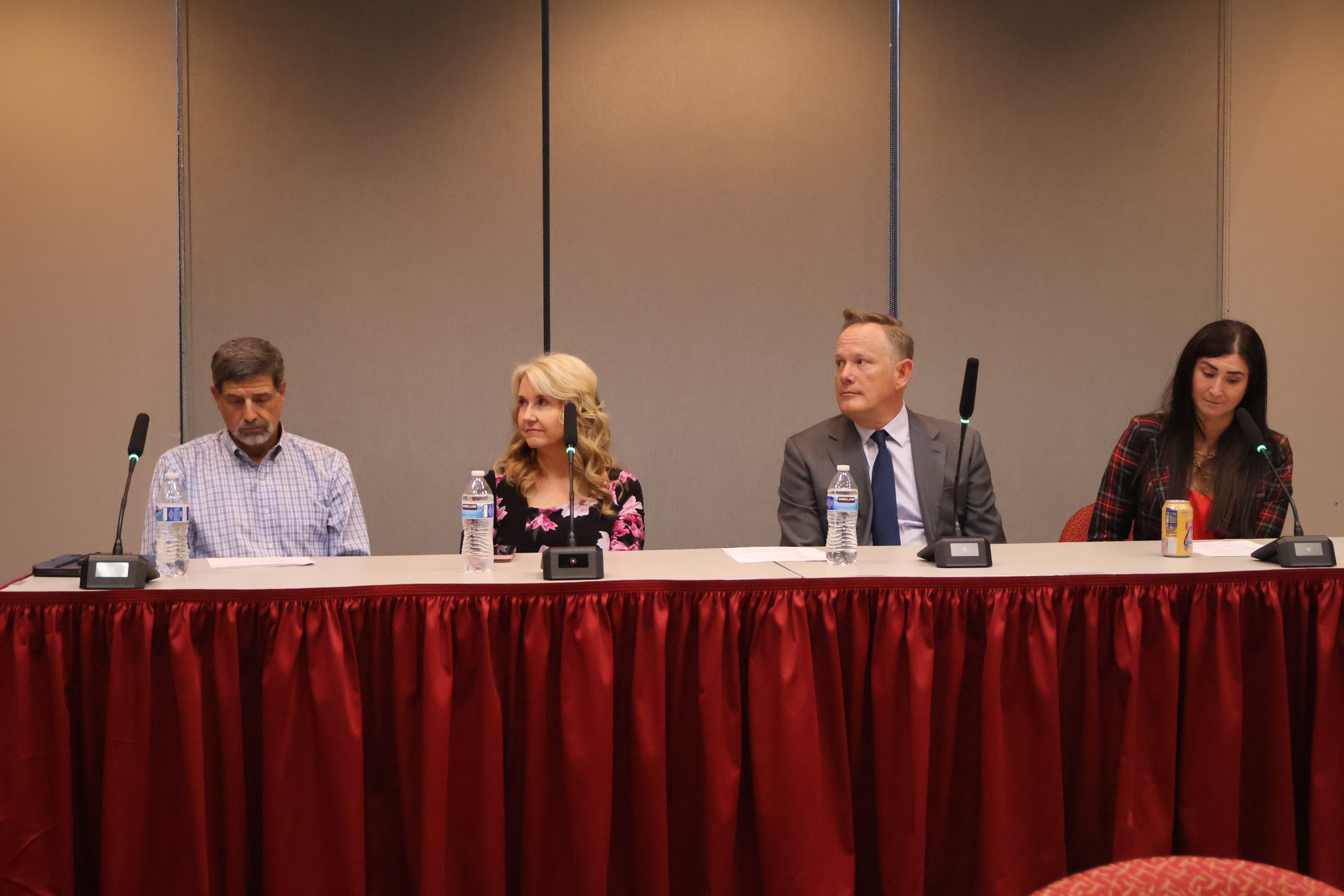
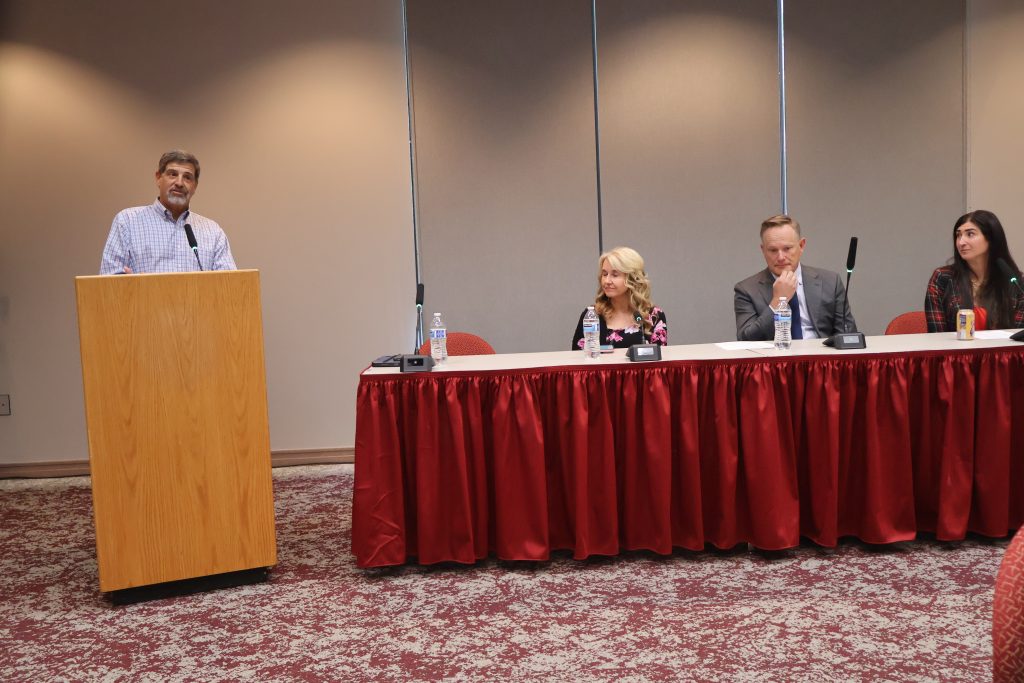
A major highlight of the day was the Plenary Courts Panel, moderated by Maryt Fredrickson of the Utah Supreme Court. The panel featured:
Judge Richard Mrazik (Third District Court)
Jonathan Puente (Office of Fairness and Accountability)
Janine Liebert (Utah State Courts Self-Help Center)
Together, they addressed the real obstacles people face in navigating the court system—from confusing processes to resource gaps. Their solutions centered on a simple principle: everyone deserves to be heard.
The Energy of the 1-Minute Blitz
One of the most anticipated moments of the Summit was the 1-Minute Blitz, where 19 organizations gave fast-paced, creative pitches for $1,000 grants. The room filled with laughter, applause, and even sing-alongs as participants made their case.
This year’s winners included:
1st Place: No More A Stranger Foundation
2nd Place: Timpanogos Legal Center
Random Drawing Winner: Elevate Utah
The Blitz once again showed that access to justice work is fueled not just by serious commitment but also by creativity and joy.
Breakout Sessions: Innovation in Action
Afternoon workshops provided hands-on learning in three critical areas:
AI & Tools for Expanding Access to Justice – Exploring how technology can streamline and expand legal services.
New Models for Legal Access – Highlighting community-based justice approaches and the role of non-lawyer advocates.
The Summit also celebrated leaders who have made a lasting impact. Susan Griffith, Executive Director of Timpanogos Legal Center, received the Professional Legal Services Impact Award for her decades-long commitment to family law and domestic violence advocacy.
A Day to Remember
As the Summit closed, participants left with a renewed sense of purpose and a reminder of Sorenson’s message: progress happens one connection at a time. The work is hard, the challenges are real, but together, the access to justice community is stronger and more determined than ever.
A Special Thank You to Our Sponsors
This year’s Summit would not have been possible without the generosity of our sponsors:
Snell & Wilmer – Presenting Sponsor & Lunch
Coil Law – Presenting Sponsor & Keynote
Kirkland & Ellis – Free Legal Clinic
Parr Brown Gee & Loveless – One Minute Blitz
Utah Bar Foundation – Headshots & Travel Stipends
Their support ensures that events like the Access to Justice Summit not only inspire but also provide tangible resources for the vital work of serving Utah’s communities.
SALT LAKE CITY (October 1, 2025) – The Utah Supreme Court has approved a groundbreaking rule (Rule 14-703A) creating an Alternate Pathway to Attorney Licensure, administered by the Utah State Bar. This newly adopted option is offered starting next year and is a skills-based, practice-ready route for law school graduates to become licensed attorneys. It complements the existing bar exam format with a pathway that reflects the evolving needs of both the profession, and the public.
The Bar Admissions Working Group, established by the Utah Supreme Court, was tasked with exploring alternatives to the traditional bar exam for assessing competence to practice law in Utah. In response to growing national and local calls for a licensure model that better reflects real-world skills, reduces economic barriers, and supports workforce readiness, the group developed an alternate pathway to admission. The Working Group is made up of 15 members representing a cross-section of Utah’s legal community, including judges, practitioners and academics.
“We are pleased to offer an alternate path for licensure,” said Utah State Bar Executive Director Elizabeth Wright. “We were keenly aware that one size doesn’t fit all, and providing an option equips those who excel outside of a traditional exam with practical skills for a successful career in the legal profession.”
Applications for the skills-based licensure model open January 1, 2026. Among the requirements for the program are:
240 hours of supervised legal practice under a qualified attorney,
Law school required skills coursework,
A written performance exam administered by the Utah State Bar.
This method is backed by growing empirical research indicating that skills-based assessments are more effective at predicting future success in legal practice than standardized tests alone. Jurisdictions exploring similar models have reported that practice-based pathways produce attorneys who are more confident, better prepared and client-focused from day one.
Critically, the alternate pathway doesnot lower licensure standards. Instead, it modifies the way competence is demonstrated, preserving rigor while enhancing relevance. The combined hands-on training and coursework exceed many traditional prep timelines, offering deeper engagement with real legal work.
“This is not about making it easier to become a lawyer,” said Utah Supreme Court Associate Chief Justice, and Working Group Chair, John A. Pearce. “It’s about making it smarter. This option gives graduates a financially viable way to begin practicing law without months of unpaid studying and the potential of thousands of dollars in prep costs. The Utah Supreme Court is convinced that this path will produce attorneys who are better prepared to immediately practice law.”
The alternate pathway does not replace the Uniform Bar Exam (UBE) or the forthcoming NextGen Bar Exam, which Utah will administer beginning in July 2028. Rather, it offers choices so candidates can pursue the pathway that best aligns with their learning style, financial situation and career goals.
During the public comment period in late 2024, the judiciary received 103 submissions. Many praised the pathway’s emphasis on real-world legal service, which enhances public protection and access to justice.
As more jurisdictions evaluate licensure reform, Utah is positioned at the forefront of this national conversation. While some states still tie admission by reciprocity to bar exam passage, others accept years of practice in lieu. With this alternate pathway, Utah graduates can start gaining that experience immediately, positioning them for broader opportunities in the years ahead.
About the Utah State Bar Established in 1931 under the authority of the Utah Supreme Court, the Utah State Bar regulates and supports over 12,000 attorneys statewide. The Bar is dedicated to advancing a justice system that is accessible, fair, and effective, while equipping legal professionals with the tools and training to serve the public with excellence.
###
CONTACT Jennifer Weaver – Communications Director Utah State Bar Office: 801-746-5237 Cell: 385-329-3558 jweaver@utahbar.org
Utah’s Mock Trial Program is seeking volunteers to serve as judges and attorney coaches for the upcoming 2026 season. Whether you are an attorney, law student, or community member with an interest in education and the law, this is an excellent opportunity to make a meaningful impact on students across the state.
About Utah Mock Trial
Sponsored by Utah Law-Related Education, the Mock Trial program brings legal education to life for middle and high school students. Participants step into the roles of attorneys and witnesses, gaining real-world experience in critical thinking, teamwork, public speaking, and advocacy. With your guidance, students engage in a dynamic, hands-on legal experience that inspires future leaders.
Volunteer Roles
Judges Each trial is evaluated by a three-person judging panel:
Presiding Judge – rules on objections
Two Panel Judges – evaluate performance and provide constructive feedback
Key Details
Each trial lasts approximately 2.5 hours
Volunteers must be 18 or older
Attorney Coaches Attorney coaches mentor student teams—virtually or in person—helping them understand legal principles and courtroom procedure.
Must be a licensed attorney
Coaches do not prepare materials for students
Flexible commitment: meet with teams once or multiple times, depending on availability
Training & Materials
All volunteers receive access to:
Training videos
Judge and coach instructions
Mock Trial case materials and handbook (provided in advance)
Important Trial Dates
We will need approximately 120 judges per day for the following all-day competitions:
Saturday, January 31 – trials at 9:30 a.m. and 2:30 p.m.
Saturday, February 7 – trials at 9:30 a.m. and 2:30 p.m.
Saturday, February 21 – trials at 9:30 a.m. and 1:30 p.m.
Additional trials will take place throughout the season. Please see the full Calendar of Events for details.
Complete the volunteer registration form and join us in supporting Utah students while strengthening the future of our legal community. We look forward to working with you!
Each September, our nation commemorates Constitution Day, honoring the document that laid the foundation for our democracy and continues to shape the rule of law today. The Utah State Bar is proud to help lawyers, teachers, families, and the public connect with the Constitution in meaningful, engaging ways.
That’s why we created the Utah State Bar Constitution Day page — a hub of interactive tools, resources, and opportunities designed to bring the Constitution to life for everyone.
What You’ll Find on the Constitution Day Page
Digital Trivia Games Test your knowledge of the Constitution and challenge your friends, family, or students! These fun, interactive games make civic education exciting and accessible for all ages.
Calendar of Events & “tASKs“ Follow along with a schedule of Constitution-focused activities and “tASKs” — quick, hands-on challenges that encourage deeper learning about the law of the land.
Curriculum for K–12 Teachers Teachers can access ready-to-use classroom curriculum to help students understand the Constitution’s history, principles, and continued importance. Whether you’re teaching 5th graders or high school seniors, these materials are adaptable and engaging.
Downloadable Resources Printable lesson plans, discussion guides, and civic education handouts make it easy to bring the Constitution into your classroom or home. You can download a PDF copy of the Constitution, too!
Free Pocket Constitutions The Utah State Bar has provided a link for you to request a complimentary pocket constitution, which is a great way to put the Constitution directly into your own hands.
Classroom Visits from Utah Lawyers Teachers can even invite a volunteer Utah attorney to visit their classroom – in-person or virtually – offering students the chance to meet a practicing lawyer and hear firsthand how the Constitution influences their work.
CLEs for Lawyers The Bar proudly presents Constitution Day 2025: A CLE Two-Part Series, offering lawyers a unique opportunity to reflect on the enduring influence of the U.S. Constitution on the practice of law in Utah.
Session One (September 9, 12–1 pm) features a practitioner panel with Simón Cantarero, John A. Adams, and Kristin “Katie” Woods, who will explore how the Constitution continues to guide advocacy and professional civility in legal practice (1 hour professionalism/civility MCLE credit).
Session Two (September 30, 12–1 pm) will bring together distinguished members of the Utah and U.S. judiciary to discuss how constitutional principles shape judicial service, ethical boundaries, and the rule of law in Utah (1 hour ethics MCLE credit). Both sessions will be held via Zoom, with login details provided before each event.
Participants may register for both sessions for $50 or individually for $30 each, with up to 2 hours of CLE credit available (pending approval). Register using your Practice Portal.
Why It Matters
The Constitution is more than words on parchment. It is a living framework that guides our courts, protects our freedoms, and inspires civic engagement. By exploring the Bar’s Constitution Day resources, you, your students, and your families can see how this foundational document remains relevant and vital today.
Get Involved
Visit utahbar.org/constitution-day to explore the games, download resources, sign up for events, or request a pocket constitution. Whether you’re a lawyer, a teacher, a parent, or simply a curious citizen, there’s something for everyone.
Together, let’s honor Constitution Day by learning, sharing, and celebrating the enduring principles that unite us.
SALT LAKE CITY (Sept. 5, 2025) – Gov. Spencer J. Cox has appointed Todd C. Hilbig to serve as a judge in Utah’s Third District Court serving Salt Lake, Summit, and Tooele counties. His nomination is subject to confirmation by the Utah Senate.
“Todd Hilbig has nearly 30 years of experience, from advocating for federal agencies to representing Utah businesses in court,” Gov. Cox said. “That breadth of expertise, paired with his integrity and commitment to service, will serve Utah well.”
Hilbig has served as an Assistant United States Attorney for the District of Utah since 2018, specializing in civil litigation on behalf of federal departments and agencies. In this role, he has represented the United States in federal district court and the 10th Circuit Court of Appeals on a wide range of matters including constitutional questions, employment discrimination, contracts, and tort claims. He was appointed by the U.S. Attorney as an ethics advisor and has received advanced training in legal operations management and advocacy from the Department of Justice.
Prior to his federal service, Hilbig was a partner and shareholder at Morgan, Minnock, Rice & Miner in Salt Lake City, where he practiced civil litigation for nearly two decades. His career includes extensive trial and appellate experience in both state and federal courts, with a focus on construction, malpractice, products liability, and insurance law.
“I’m incredibly honored and humbled to be appointed by Gov. Cox and am very grateful to him and Lt. Gov. Henderson for their trust in me to serve alongside the esteemed judges in Utah’s Third District Court,” Hilbig said. “If I’m fortunate enough to be confirmed by the Senate, I promise to diligently serve our community and work hard, with impartiality and compassion, in the service of fairness, justice, and fidelity to the law.”
Hilbig earned his law degree from the J. Reuben Clark Law School at Brigham Young University, where he served as editor-in-chief of the BYU Journal of Public Law. He also holds a bachelor’s degrees in economics and German from BYU.
###
ROBERT CARROLL | Director of Communications OFFICE OF GOV. SPENCER J. COX STATE OF UTAH 801-243-2290
SALT LAKE CITY (Sept. 5, 2025) – Gov. Spencer J. Cox has appointed Brett Varoz to the Utah Board of Pardons and Parole, filling a vacancy created by the resignation of Scott Stephenson. Varoz’s appointment is subject to confirmation by the Utah Senate.
Varoz has served at the Board of Pardons and Parole since 2011, including as chief hearing officer since 2020. He brings more than three decades of corrections experience, including 21 years with the Utah Department of Corrections in roles ranging from correctional officer to correctional administrator.
“Brett has dedicated his entire career to public safety and fairness in Utah’s justice system,” Gov. Cox said. “His knowledge, professionalism, and steady leadership will be a tremendous asset to the board as it continues its vital work.”
Varoz said he is grateful for the opportunity. “I am humbled and honored that Gov. Cox has selected me to be a member of the Board of Pardons and Parole,” Varoz said. “If confirmed, I look forward to continuing my service to the people of Utah, and I would strive to carry out my duties with professionalism, integrity and respect.”
###
ROBERT CARROLL | Director of CommunicationsOFFICE OF GOV. SPENCER J. COX STATE OF UTAH 801-243-2290