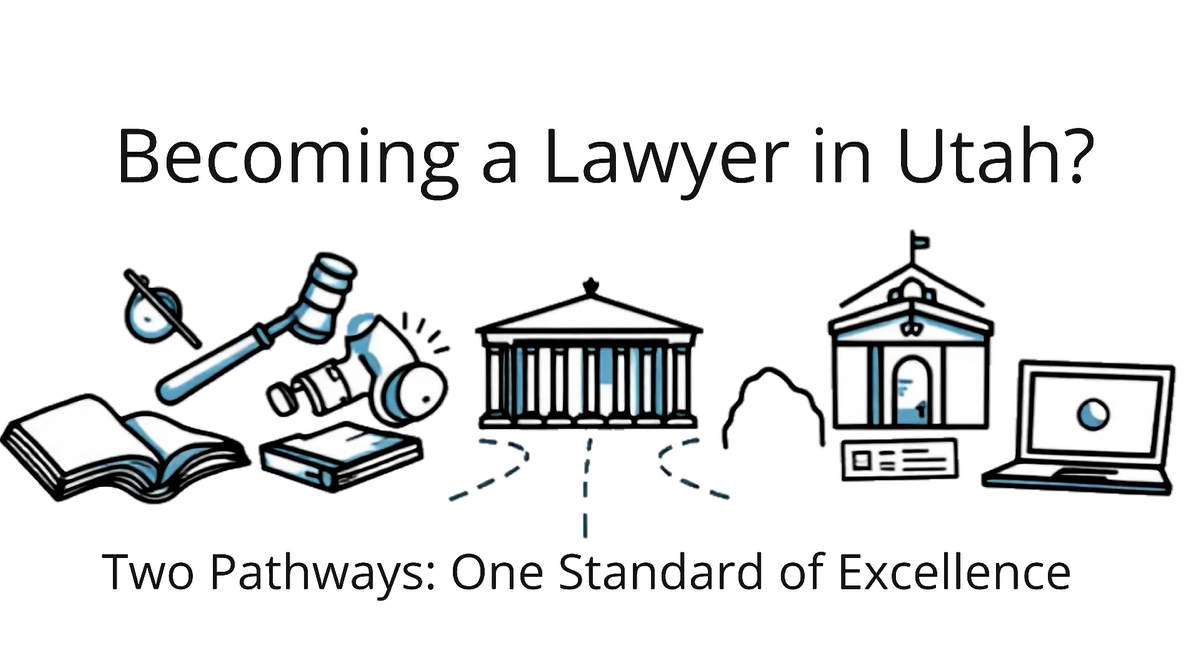
Two Pathways: One Standard of Excellence

PRESS RELEASE

SALT LAKE CITY (October 1, 2025) – The Utah Supreme Court has approved a groundbreaking rule (Rule 4-703A) creating an Alternate Pathway to Attorney Licensure, administered by the Utah State Bar. This newly adopted option is offered starting next year and is a skills-based, practice-ready route for law school graduates to become licensed attorneys. It complementsthe existing bar exam format with a pathway that reflects the evolving needs of both the profession, and the public.

The Bar Admissions Working Group, established by the Utah Supreme Court, was tasked with exploring alternatives to the traditional bar exam for assessing competence to practice law in Utah. In response to growing national and local calls for a licensure model that better reflects real-world skills, reduces economic barriers, and supports workforce readiness, the group developed an alternate pathway to admission. The Working Group is made up of 15 members representing a cross-section of Utah’s legal community, including judges, practitioners and academics.

“We are pleased to offer an alternate path for licensure,” said Utah State Bar Executive Director Elizabeth Wright. “We were keenly aware that one size doesn’t fit all, and providing an option equips those who excel outside of a traditional exam with practical skills for a successful career in the legal profession.”

Applications for the skills-based licensure model open January 1, 2026. Among the requirements for the program are:

  • 240 hours of supervised legal practice under a qualified attorney,
  • Law school required skills coursework,
  • A written performance exam administered by the Utah State Bar.

This method is backed by growing empirical research indicating that skills-based assessments are more effective at predicting future success in legal practice than standardized tests alone. Jurisdictions exploring similar models have reported that practice-based pathways produce attorneys who are more confident, better prepared and client-focused from day one.

Critically, the alternate pathway does not lower licensure standards. Instead, it modifies the way competence is demonstrated, preserving rigor while enhancing relevance. The combined hands-on training and coursework exceed many traditional prep timelines, offering deeper engagement with real legal work.

“This is not about making it easier to become a lawyer,” said Utah Supreme Court Associate Chief Justice, and Working Group Chair, John A. Pearce. “It’s about making it smarter. This option gives graduates a financially viable way to begin practicing law without months of unpaid studying and the potential of thousands of dollars in prep costs. The Utah Supreme Court is convinced that this path will produce attorneys who are better prepared to immediately practice law.”

The alternate pathway does not replace the Uniform Bar Exam (UBE) or the forthcoming NextGen Bar Exam, which Utah will administer beginning in July 2028. Rather, it offers choices so candidates can pursue the pathway that best aligns with their learning style, financial situation and career goals.

During the public comment period in late 2024, the judiciary received 103 submissions. Many praised the pathway’s emphasis on real-world legal service, which enhances public protection and access to justice.

As more jurisdictions evaluate licensure reform, Utah is positioned at the forefront of this national conversation. While some states still tie admission by reciprocity to bar exam passage, others accept years of practice in lieu. With this alternate pathway, Utah graduates can start gaining that experience immediately, positioning them for broader opportunities in the years ahead.


About the Utah State Bar
Established in 1931 under the authority of the Utah Supreme Court, the Utah State Bar regulates and supports over 12,000 attorneys statewide. The Bar is dedicated to advancing a justice system that is accessible, fair, and effective, while equipping legal professionals with the tools and training to serve the public with excellence.


###

CONTACT
Jennifer WeaverCommunications Director
Utah State Bar
Office: 801-746-5237 Cell: 385-329-3558
jweaver@utahbar.org
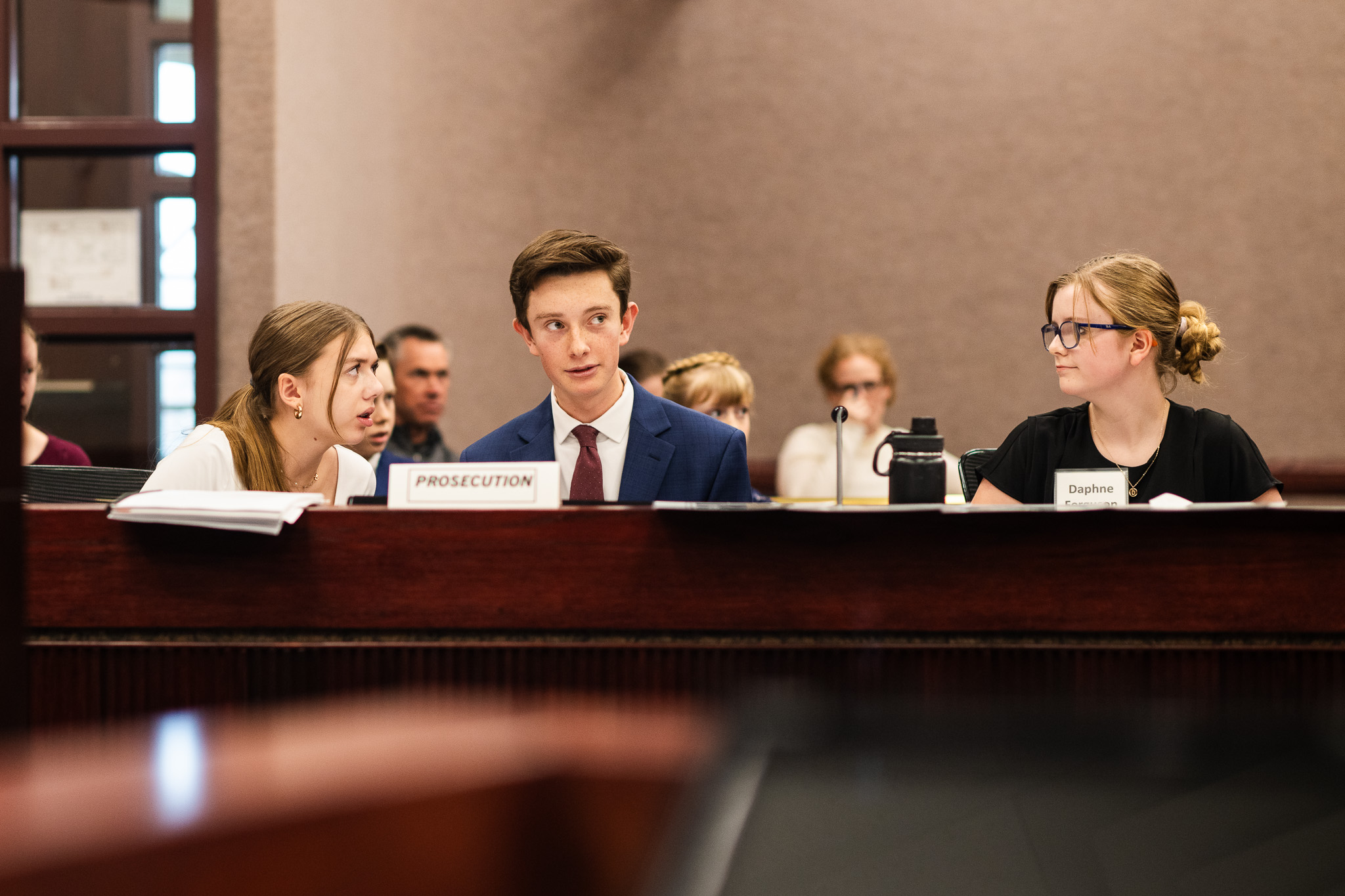

Utah’s Mock Trial Program Seeks Volunteer Judges and Coaches for 2026 Season

Utah’s Mock Trial Program is seeking volunteers to serve as judges and attorney coaches for the upcoming 2026 season. Whether you are an attorney, law student, or community member with an interest in education and the law, this is an excellent opportunity to make a meaningful impact on students across the state.

About Utah Mock Trial

Sponsored by Utah Law-Related Education, the Mock Trial program brings legal education to life for middle and high school students. Participants step into the roles of attorneys and witnesses, gaining real-world experience in critical thinking, teamwork, public speaking, and advocacy. With your guidance, students engage in a dynamic, hands-on legal experience that inspires future leaders.

Volunteer Roles

Judges
Each trial is evaluated by a three-person judging panel:

  • Presiding Judge – rules on objections
  • Two Panel Judges – evaluate performance and provide constructive feedback

Key Details

  • Each trial lasts approximately 2.5 hours
  • Volunteers must be 18 or older

Attorney Coaches
Attorney coaches mentor student teams—virtually or in person—helping them understand legal principles and courtroom procedure.

  • Must be a licensed attorney
  • Coaches do not prepare materials for students
  • Flexible commitment: meet with teams once or multiple times, depending on availability

Training & Materials

All volunteers receive access to:

  • Training videos
  • Judge and coach instructions
  • Mock Trial case materials and handbook (provided in advance)

Important Trial Dates

We will need approximately 120 judges per day for the following all-day competitions:

  • Saturday, January 31 – trials at 9:30 a.m. and 2:30 p.m.
  • Saturday, February 7 – trials at 9:30 a.m. and 2:30 p.m.
  • Saturday, February 21 – trials at 9:30 a.m. and 1:30 p.m.

Additional trials will take place throughout the season. Please see the full Calendar of Events for details.

MCLE Credit

Judges and attorney coaches may be eligible for MCLE credit. Please see program details for more information.

Ready to Get Involved?

Complete the volunteer registration form and join us in supporting Utah students while strengthening the future of our legal community.  We look forward to working with you!

RELATED: Utah Law-Related Education: Be Part of the 2025 Mock Trial Season

Celebrate Constitution Day with the Utah State Bar

Each September, our nation commemorates Constitution Day, honoring the document that laid the foundation for our democracy and continues to shape the rule of law today. The Utah State Bar is proud to help lawyers, teachers, families, and the public connect with the Constitution in meaningful, engaging ways.

That’s why we created the Utah State Bar Constitution Day page — a hub of interactive tools, resources, and opportunities designed to bring the Constitution to life for everyone.

What You’ll Find on the Constitution Day Page

Digital Trivia Games
Test your knowledge of the Constitution and challenge your friends, family, or students! These fun, interactive games make civic education exciting and accessible for all ages.

Calendar of Events & “tASKs
Follow along with a schedule of Constitution-focused activities and “tASKs” — quick, hands-on challenges that encourage deeper learning about the law of the land.

Curriculum for K–12 Teachers
Teachers can access ready-to-use classroom curriculum to help students understand the Constitution’s history, principles, and continued importance. Whether you’re teaching 5th graders or high school seniors, these materials are adaptable and engaging.

Downloadable Resources
Printable lesson plans, discussion guides, and civic education handouts make it easy to bring the Constitution into your classroom or home. You can download a PDF copy of the Constitution, too!

Free Pocket Constitutions
The Utah State Bar has provided a link for you to request a complimentary pocket constitution, which is a great way to put the Constitution directly into your own hands.

Classroom Visits from Utah Lawyers
Teachers can even invite a volunteer Utah attorney to visit their classroom – in-person or virtually – offering students the chance to meet a practicing lawyer and hear firsthand how the Constitution influences their work.

CLEs for Lawyers
The Bar proudly presents Constitution Day 2025: A CLE Two-Part Series, offering lawyers a unique opportunity to reflect on the enduring influence of the U.S. Constitution on the practice of law in Utah.

  • Session One (September 9, 12–1 pm) features a practitioner panel with Simón Cantarero, John A. Adams, and Kristin “Katie” Woods, who will explore how the Constitution continues to guide advocacy and professional civility in legal practice (1 hour professionalism/civility MCLE credit).
  • Session Two (September 30, 12–1 pm) will bring together distinguished members of the Utah and U.S. judiciary to discuss how constitutional principles shape judicial service, ethical boundaries, and the rule of law in Utah (1 hour ethics MCLE credit). Both sessions will be held via Zoom, with login details provided before each event.

Participants may register for both sessions for $50 or individually for $30 each, with up to 2 hours of CLE credit available (pending approval). Register using your Practice Portal.

Why It Matters

The Constitution is more than words on parchment. It is a living framework that guides our courts, protects our freedoms, and inspires civic engagement. By exploring the Bar’s Constitution Day resources, you, your students, and your families can see how this foundational document remains relevant and vital today.

Get Involved

Visit utahbar.org/constitution-day to explore the games, download resources, sign up for events, or request a pocket constitution. Whether you’re a lawyer, a teacher, a parent, or simply a curious citizen, there’s something for everyone.

Together, let’s honor Constitution Day by learning, sharing, and celebrating the enduring principles that unite us.

VIDEO INSTRUCTION ON HOW TO USE THE WEBPAGE.

*This blog post was partially written with assistance from AI.

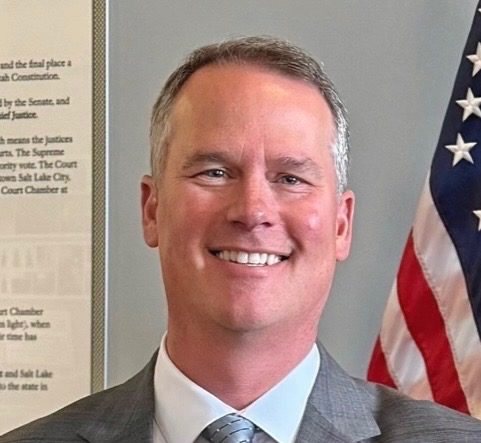
Gov. Cox Appoints Todd Hilbig to Third District Court

SALT LAKE CITY (Sept. 5, 2025) – Gov. Spencer J. Cox has appointed Todd C. Hilbig to serve as a judge in Utah’s Third District Court serving Salt Lake, Summit, and Tooele counties. His nomination is subject to confirmation by the Utah Senate.

“Todd Hilbig has nearly 30 years of experience, from advocating for federal agencies to representing Utah businesses in court,” Gov. Cox said. “That breadth of expertise, paired with his integrity and commitment to service, will serve Utah well.”

Hilbig has served as an Assistant United States Attorney for the District of Utah since 2018, specializing in civil litigation on behalf of federal departments and agencies. In this role, he has represented the United States in federal district court and the 10th Circuit Court of Appeals on a wide range of matters including constitutional questions, employment discrimination, contracts, and tort claims. He was appointed by the U.S. Attorney as an ethics advisor and has received advanced training in legal operations management and advocacy from the Department of Justice.

Prior to his federal service, Hilbig was a partner and shareholder at Morgan, Minnock, Rice & Miner in Salt Lake City, where he practiced civil litigation for nearly two decades. His career includes extensive trial and appellate experience in both state and federal courts, with a focus on construction, malpractice, products liability, and insurance law.

“I’m incredibly honored and humbled to be appointed by Gov. Cox and am very grateful to him and Lt. Gov. Henderson for their trust in me to serve alongside the esteemed judges in Utah’s Third District Court,” Hilbig said. “If I’m fortunate enough to be confirmed by the Senate, I promise to diligently serve our community and work hard, with impartiality and compassion, in the service of fairness, justice, and fidelity to the law.”

Hilbig earned his law degree from the J. Reuben Clark Law School at Brigham Young University, where he served as editor-in-chief of the BYU Journal of Public Law. He also holds a bachelor’s degrees in economics and German from BYU.

###

ROBERT CARROLL | Director of Communications
OFFICE OF GOV. SPENCER J. COX
STATE OF UTAH
801-243-2290

Gov. Cox Appoints Brett Varoz to the Utah Board of Pardons and Parole

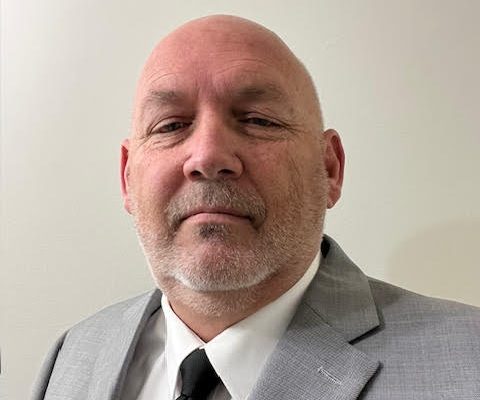
SALT LAKE CITY (Sept. 5, 2025) – Gov. Spencer J. Cox has appointed Brett Varoz to the Utah Board of Pardons and Parole, filling a vacancy created by the resignation of Scott Stephenson. Varoz’s appointment is subject to confirmation by the Utah Senate.

Varoz has served at the Board of Pardons and Parole since 2011, including as chief hearing officer since 2020. He brings more than three decades of corrections experience, including 21 years with the Utah Department of Corrections in roles ranging from correctional officer to correctional administrator.

“Brett has dedicated his entire career to public safety and fairness in Utah’s justice system,” Gov. Cox said. “His knowledge, professionalism, and steady leadership will be a tremendous asset to the board as it continues its vital work.”

Varoz said he is grateful for the opportunity. “I am humbled and honored that Gov. Cox has selected me to be a member of the Board of Pardons and Parole,” Varoz said. “If confirmed, I look forward to continuing my service to the people of Utah, and I would strive to carry out my duties with professionalism, integrity and respect.”

###

ROBERT CARROLL | Director of CommunicationsOFFICE OF GOV. SPENCER J. COX

STATE OF UTAH
801-243-2290

Nominees announced for a Utah Supreme Court vacancy

SALT LAKE CITY – The Appellate Court Nominating Commission has selected nominees for a vacancy on the Utah Supreme Court. This position results from the retirement of Justice John A. Pearce, December 1, 2025.

The nominees for the vacancy are:

  • Matthew Bell, Judge, Fifth District Court;
  • James Gardner, Judge, Third District Court;
  • Ryan Harris, Judge, Utah Court of Appeals;
  • John Nielsen, Judge, Third District Court;
  • Derek Pullan, Judge, Fourth District Court;
  • Stanford Purser, Solicitor General, Utah Attorney General’s Office;
  • Ryan Tenney, Judge, Utah Court of Appeals.

Written comments can be submitted to the Appellate Court Nominating Commission at judicialvacancies@utah.gov or Commission on Criminal and Juvenile Justice, P.O. Box 142330, Salt Lake City, UT 84114-2330. The deadline for written comments is noon, Sept. 13, 2025. The Nominating Commission may request further information or conduct an investigation of the nominees after reviewing public comments. After the public comment period, the names will be sent to Gov. Spencer J. Cox, who will have 30 days to make an appointment. Gov. Cox’s appointee is subject to confirmation by the Utah Senate.

###

ROBERT CARROLL | Director of Communications
OFFICE OF GOV. SPENCER J. COX
STATE OF UTAH
801-243-2290

Nominees Announced for Tremonton Justice Court Vacancy

Tremonton, Utah—The Tremonton Judicial Nominating Commission has selected three nominees for a justice court judge position that will serve Tremonton, Utah. The final candidate will replace Judge Kevin Christensen who resigned in March. 

Following is an alphabetical listing of the nominees followed by place of employment and city of residence:  

∙ Michael E. Christiansen, J.D., Attorney at Law, resident of Perry,  

∙ Dustin D. Ericson, J.D., Attorney at Law, resident of North Logan, and 

∙ Travis Marker, J.D., Attorney at Law, resident of North Ogden.  

A comment period will be held through September 1, 2025. Once application materials are provided to Lyle Holmgren, the Tremonton City Mayor, he will have 30 days to make a final selection. His selection must then be ratified by the Tremonton City Council. To submit written comments about any of the candidates, please email James Peters, Justice Court Administrator, at jamesp@utcourts.gov.  

# # #

Bar Celebrates 95 Years with Oral History Project

In celebration of our 95th anniversary, we are launching a special initiative to capture and preserve the personal stories and experiences of our licensees. From landmark cases and pivotal career moments to lasting mentorships and professional friendships, your story is part of the Bar’s legacy.

To honor this milestone, the Bar will produce a series of 20- to 30-minute oral history video interviews. These recordings will be housed on the Bar’s YouTube Channel, serving as a permanent archive for future generations. The first oral history recorded is of former Bar Executive Director John Baldwin. Click here or below to watch the video and think about getting involved!

All current and former licensees of the Bar are invited to participate in this project. If you are interested in being interviewed, please contact Communications Director, Jennifer Weaver, at jweaver@utahbar.org to schedule a recording session.

Thank you for helping us celebrate 95 years of service, leadership, and community in Utah’s legal profession.

Public Wi-Fi – Should Lawyers Just Say No?

By Mark Bassingthwaighte, Esq.
mbass@alpsinsurance.com

In today’s world, people frequently work outside of their offices. They may be working while visiting a coffee shop, sitting at an airport, staying at a hotel, or enjoying a city park. Public Wi-Fi networks are seemingly everywhere, but there’s a problem. While accessing public Wi-Fi can be convenient when all you want to do is buy something on Amazon, check your e-mail, or rebook a flight, there are associated risks that should never be minimized, or heaven forbid, dismissed out-of-hand. Unfortunately for lawyers, the risks are even more concerning given the sensitive nature of the information they handle.

Public Wi-Fi networks are inherently insecure. Unlike private, encrypted networks, public Wi-Fi often lacks robust security protocols, making it a prime target for cybercriminals. To give you an idea of the seriousness of the risk. Here are a few specific threats everyone faces when connecting to unsecured networks:

  • Man-in-the-Middle Attacks: This is one of the most common threats on public Wi-Fi networks. In this type of attack, a cybercriminal intercepts the communication between your device and the Wi-Fi network, allowing him to access sensitive information such as login credentials, emails, and the stored data on your drive.
  • Malicious Hotspots: Cybercriminals can set up rogue Wi-Fi networks that mimic legitimate ones but are actually designed to enable a cybercriminal to capture your data. If you fall prey to this type of attack by unwittingly connecting to a rogue network, your data stream will be going directly into a cybercriminal’s hands.
  • Rogue Access Points: A rogue access point is something well-meaning employees of various businesses sometimes set up. In short, wireless routers are added to a Wi-Fi network in order to give more customers access to the Internet. Often these routers are not configured properly, which makes them easy to hack into, even though the network itself might be secure. If you unknowingly happen to use a rogue access point to connect to the Internet, you are now vulnerable to a wide variety of cyberattacks.
  • Computer Worms and Other Malware Injections: Computer worms self-propagate and can be programmed to do all kinds of things to include stealing documents, capturing passwords, and spreading ransomware. If you happen to be on a public Wi-Fi network and fail to have robust security in place, a worm could readily jump from another infected user currently on the network to you. And it’s not just worms you need to worry about. Public Wi-Fi can serve as a conduit for a variety of malware attacks. If a cybercriminal gains access to a shared network, she may distribute malicious software that can infect your devices potentially resulting in a data breach, ransomware attack, or unauthorized remote access.
  • Packet Sniffing: Packet sniffing is a technique used by cybercriminals to capture and analyze data packets traveling over a network. On an unprotected public Wi-Fi network, packet sniffing tools can be used to monitor and capture sensitive information, such as passwords and financial data.

Starting to get the picture? I hope so. Again, public Wi-Fi networks are inherently insecure. That’s just the way it is. Does this mean lawyers and those who work for them should never access public Wi-Fi? In a perfect world, I might try to argue that one; but I can also acknowledge this wouldn’t be realistic. There are going to be times when it’s necessary; and truth be told, I occasionally use public Wi-Fi myself, but only for certain tasks. The better question is if you have a need to use public Wi-Fi, how can you responsibly address the associated risks? Start with the following:

  • Approach All Public Wi-Fi Networks with a Healthy Level of Distrust – Never connect to an unknown network, particularly if the connection is offered for free or states that no password is necessary. Also, be on the lookout for network names that are similar to the name of the local venue offering a Wi-Fi connection. Just because a network connection that happens to be named Free Hilton Wi-Fi doesn’t mean it’s actually the legitimate Hilton network. If you’re not 100% certain, always ask what the proper name of the local network you are wanting to connect to is and connect to that.
  • Use a Virtual Private Network (VPN) – A VPN encrypts internet traffic, making it unreadable to cybercriminals on public Wi-Fi. You should always connect to a trusted VPN before accessing sensitive information. If your firm provides a corporate VPN solution, use it! If not, use a personal VPN service like NordVPN, ExpressVPN, or ProtonVPN.
  • Enable Two-Factor Authentication (2FA) on All Accounts – 2FA adds an extra layer of security by requiring a secondary verification method (such as a text message code or authentication app) to access accounts. Even if cybercriminals obtain login credentials, they won’t be able to access protected accounts without the second authentication factor.
  • Avoid Accessing Sensitive Data on Public Wi-Fi – Whenever possible, avoid logging into case management systems, email accounts, or other sensitive applications while on public Wi-Fi. If urgent access is needed, a VPN should be used to secure the connection.
  • Better Yet, Use Mobile Hotspots Instead of Public Wi-Fi: A safer alternative to public Wi-Fi is using a mobile hotspot from a smartphone or a dedicated cellular hotspot device. These connections are generally encrypted and far more secure than public networks.
  • Disable Auto Connect to Wi-Fi Networks: When auto connect is enabled, your device can automatically connect to a malicious network. To prevent this unintentional result from ever occurring keep this setting disabled at all times.
  • Keep Software and Security Patches Updated: Cybercriminals often exploit vulnerabilities in outdated software. Regularly update your operating systems, web browsers, and security applications to ensure you have the latest security patches. Enabling any automatic update features will help make this process as painless as possible.  

RELATED: Prospective Clients and the Conflicts They Bring

I wish I could stop here but I can’t, because almost every law firm I know of is comprised of more than one person. Anyone at a firm can naively or unwittingly fall prey to a cybercriminal when logging onto a public Wi-Fi network and this could result in very serious and unintended consequences not only for your firm, but firm clients as well. Best practices now mandate that everyone who uses a mobile device for work be subject to a written policy regarding the appropriate use of public Wi-Fi. If your firm has no such policy, now’s the time. Of course, any policy is going to be meaningless if there is no training on the risks and/or no enforcement of the provisions so keep that in mind.

Now to my initial question. Should lawyers just say no to the use of public Wi-Fi or try to prohibit anyone in their employ from using it? I don’t necessarily go that far as long as all users have been made aware of the risks and given the appropriate tools that will help them minimize the risks. 

That said, let me share one final thought because I do get push back on this topic and can anticipate you will too. Some will disagree and say something along these lines, “the Starbucks signal is free, I’ve used it many times before and never had a problem so why all the unnecessary fuss?” My response is always the same. How do you know you were never a victim? No one is going to send you a thank you card for allowing them to steal your credit card number or place a keylogger on your laptop. We all need to understand that hacking tools are widely available to the masses. Always remember that you are never alone while using public Wi-Fi and you simply have no way of knowing what everyone else’s intentions are.

Mark Bassingthwaighte, Esq. Is the resident Risk Manager at ALPS Insurance. To learn more about how ALPS can support your solo or small firm visit: alpsinsurance.com

Alex N. Vandiver Named President of the Young Lawyers Division

SALT LAKE CITY (July 17, 2025) — Alex N. Vandiver has been appointed President of the Utah State Bar’s Young Lawyers Division (YLD) for the 2025–2026 term and will serve on the Bar Commission. The YLD supports attorneys who are under 36 years of age or have been admitted to the bar for 10 years or less —whichever comes later — through mentorship, education, and community engagement.

“I am looking forward to Alex’s leadership this year and having her represent the YLD on the Bar Commission. I have watched as Alex has come up through the ranks of YLD leadership and seen her lead and work collaboratively on YLD programing,” said Bar Executive Director Elizabeth Wright.

Vandiver is a litigation attorney at Parsons Behle & Latimer, specializing in commercial, civil, and environmental cases, from debt collection and construction disputes to personal injury and environmental claims. She earned her juris doctor degree and a certificate in environmental and natural resource law from the University of Utah S.J. Quinney College of Law. While there, Alex served as a Pro Bono Initiative Fellow, Executive Footnote Editor of the Utah Law Review, representative of the Minority Law Caucus, and as a William H. Leary Scholar.

Early in Vandiver’s career, she honed her administrative law and appellate skills through internships and clerkships with the Department of the Interior, Utah Legal Services, and the Utah Court of Appeals. Her dedication to public service has been recognized by both the Federal Bar Association and the Utah State Bar. She currently leads Parsons Behle & Latimer’s Attorneys of Color Affinity Group and is active in Women Lawyers of Utah and the Utah Minority Bar Association. She is also fluent in Spanish and conversational in Portuguese.

“I’m honored and energized,” Vandiver said. “The goal is to engage more of our members to build a stronger community, provide meaningful mentorship, and create lasting impact. This year will be defining for young lawyers across Utah.”

As president of the YLD, Van diver intends to grow the Division’s social events, particularly the Winter Gala and Spring Social to continue to bring young lawyers and their families together with food, music, and camaraderie. She also strives to deepen the Wills for Heroes pro bono program, offering free estate planning to first responders and their families, and to broaden the Continuing Legal Education (CLE) offerings to provide more educational opportunities.

“YLD is a crucial part of the Utah State Bar with a long history of public service with programs like Wills for Heroes. YLD also offers social and CLE programming that introduces young lawyers to the profession and all our Bar has to offer in terms of service, learning, leadership, and relationship building opportunities,” said Wright. “Alex is a strong leader and will continue the legacy and positive impact of the Utah State Bar YLD.”

 ###

Search UtahBar.org