
Why You Never Want to Set the Comfort Trap

By Mark Bassingthwaighte, Esq.
mbass@alpsinsurance.com

My experience consulting over the years with thousands of attorneys who practice in firms of all shapes and sizes all over the country taught me that the overwhelming majority of attorneys in practice are competent, well-intentioned professionals. To speak in the vernacular, our insureds are good folk. Yet, some of these attorneys have had to deal with a claim or two at some point in their career while others, even a number who were nearing retirement, never did. An interesting question is why. Of course, there are the obvious answers to include occasional missteps like missing a deadline, dabbling in an unfamiliar practice area, an impairment was in play, or poor client selection; but these examples don’t cover it all.

There is another explanation behind some of our claims that is not discussed often enough and, in my opinion, not fully appreciated for the risk it truly is. The misstep is simply getting too comfortable in one’s practice. I call this the comfort trap and the reasons behind it vary. For some, the daily routines of practicing law can become all too familiar and attention to detail starts to wane. For others, routinely working with long-term clients or the same competent staff for years on end can lead to the creation of professional and personal friendships. While this naturally brings about an elevated level of trust; here too, attention to detail can decline over time. Thus, there is a downside that can come with comfort in routines or with long-term clients and trusted staff, and it’s a trap because of the natural development of casualness and informality that all too easily follows.

The downside is this feeling of comfort can lead to a failure to thoroughly document client files. When you allow that to happen, you are setting the trap. It’s failing to document scope of representation with repeat clients because you start to assume the need for this type of documentation is no longer necessary. It’s not wanting to risk offending long-term clients, so you stop using engagement letters and closure letters. It’s failing to continue to use checklists because you have gone through the same series of steps so many times that you’ve come to view checklists as a nuisance. It’s trusting the relationship with your client so much that you now consider capturing and preserving substantive email and test messages as a waste of time. It’s taking shortcuts like not reviewing letters or documents before they’re sent out, failing to confirm that someone’s decision as to when a statute of limitations will run is accurate because your staff really do know what they’re doing, or skipping a formal conflict of interest check because relying on everyone’s memory seems equally effective. It can even be not wanting to document a file with anything at all because you are simply “doing a favor” for a long-term client, a family friend, or a staff member so you don’t view this as formally taking on a new matter.

RELATED: How to Have a Long and Successful Career as an Attorney

Feeling confident in your practice and comfortable with your clients and staff is a good thing as long as the level of comfort doesn’t result in a related casualness with file documentation and/or the procedures that get you there. When you begin to rationalize away the need to thoroughly document any given file, you really are setting a trap that can ensnare you at some point further down the road.

If you ever find yourself going in this direction, stop for a moment. Think about what’s going on and make any necessary course corrections. For example, I can accept that a concern over the use of a formal contract each time a long-term client brings a new matter to your firm is legitimate. I get it. You don’t want to risk offending the client. However, the answer is not to simply take away that critical piece of documentation. Come up with an acceptable alternative. Couldn’t you accomplish the same goal by sending a confirming email or informal letter of clarification? Of course you could.

Here’s the bottom line. In the context of a malpractice claim or a disciplinary complaint, the “failure to document” misstep often turns into a word against word dispute. It’s important for you to know and even more important for you to remember that attorneys don’t fare well when that happens. This is why you want to make sure all files are thoroughly documented. Yes, doing so with every client file may take a little extra time; but should you ever find yourself facing a malpractice claim on any one of those files, trust me, you’ll be glad you did. You have my word.

Mark Bassingthwaighte, Esq. Is the resident Risk Manager at ALPS Insurance. To learn more about how ALPS can support your solo or small firm visit: alpsinsurance.com
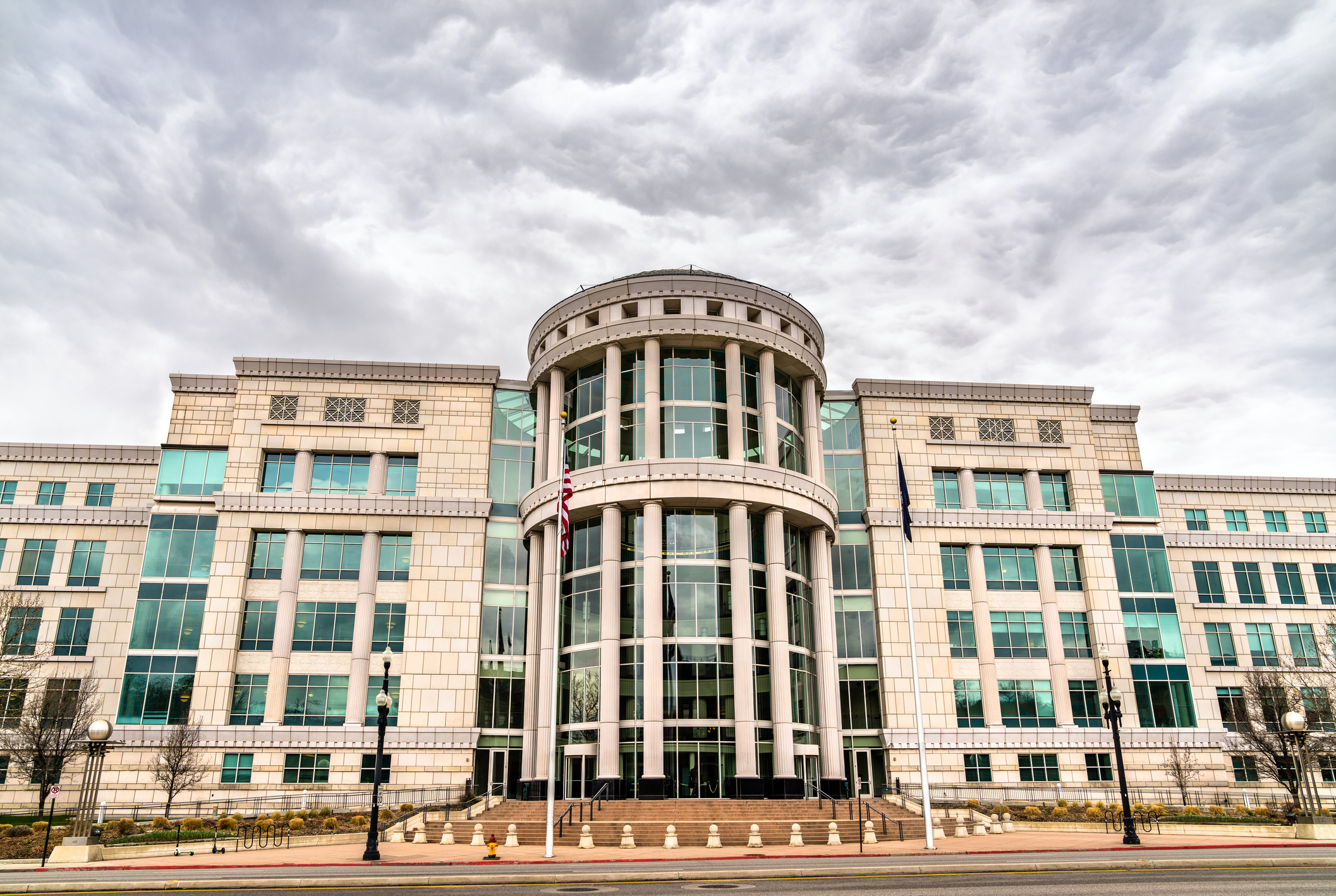

Gov. Cox Appoints Thaddeus May to the Third District Court

PRESS RELEASE

SALT LAKE CITY – Gov. Cox has appointed Thaddeus (Tad) May to the Third District Court, filling a vacancy created by Judge Holmberg’s retirement. Judicial appointments are subject to confirmation by the Utah Senate.

“Tad May’s dedication to justice and his extensive experience as a prosecutor make him an excellent choice for the bench,” said Gov. Cox. “From handling complex criminal cases to his work with Utah’s tribal communities, Tad has consistently shown a commitment to fairness and service. I am confident that his background and thoughtful approach will be a great asset to the Third District Court.”

May has served as an Assistant United States Attorney in the District of Utah since 2018, currently holding the position of Deputy Chief of the Violent Crime Unit. A significant part of his work has involved coordinating and overseeing federal prosecutions on tribal lands in Utah, where he has worked closely with Native American communities to address criminal justice issues. He has also served as the Tribal Liaison and has been a faculty trainer for the National Advocacy Center, helping to build relationships across Utah’s tribal communities. Additionally, May has argued major cases, including a murder trial and a large-scale narcotics conspiracy, and has been a key player in federal prosecutions for complex investigations.

“I am grateful to even be considered for this position, but I am beyond honored and humbled to receive this appointment,” said May. “I have spent my career advocating for the citizens of the state of Utah, and I have seen firsthand how judicial decisions have profound impacts on both individual citizens and society at large. My work with Utah’s tribal communities has been particularly meaningful, and I have great respect for the unique challenges these communities face. If confirmed, I will act in accordance with the considerable trust placed within the judiciary. My career has afforded me the opportunity to serve people from every walk of life across this state, and I feel keenly the responsibility of a judge to serve those citizens. If I am fortunate enough to be confirmed, I will strive to uphold the law with complete fidelity and to ensure all litigants are granted the dignity the law affords.”

May’s accolades include numerous awards such as the Department of Justice, District of Utah, Program Coordinator of the Year (2022), the DEA Administrator’s Award (2019), and being named Utah’s Legal Elite in 2022.

May earned his law degree from the S.J. Quinney College of Law at the University of Utah, where he was the Note and Comment Editor for the Journal of Land Resources and Environmental Law. He holds a BA in History from Brigham Young University.


ROBERT CARROLL 
| Director of Communications
OFFICE OF GOV. SPENCER J. COX
STATE OF UTAH
801-243-2290

Utah State Bar Holds Firm on Opposition to Bills That Undermine the Judiciary

PRESS RELEASE

SALT LAKE CITY, February 19, 2025 – The Utah State Bar Commission understands that attorneys, regardless of political persuasion, care about the separation of powers in our government. Therefore, the Bar is holding firm on its opposition to legislation that jeopardizes judicial independence enshrined in the state constitution. Two recent bills are particularly troubling because they establish a system under which judges will be made to answer to the legislature based on any disagreement with a judge’s ruling.

Specifically, House Bill 512 creates a new committee — a Joint Legislative Committee on Judicial Performance to shadow, and potentially override the work of the Judicial Performance Evaluation Commission (JPEC). This bill sponsored by Rep. Karianne Lisonbee is unnecessary given the excellent and transparent work that JPEC is already doing and given that JPEC was created by the Legislature and contains members nominated by leadership from the Legislature, the Governor, and the Chief Justice. The concern expressed by many licensees and our Government Relations Committee is this new entity comprised only of legislators—will inject politics into the current merit-based and nonpartisan judicial evaluation and retention process.

As part of its evaluation, the Committee can request a judge’s disciplinary record from the Judicial Conduct Commission and may investigate “any issue raised by a member of the committee, the Legislature, or a member of the public.” (See H.B. 512, lines 1457-1459.) This broad mandate means that any issue, even a disagreement with a judge’s legal ruling, could trigger an evaluation, regardless of whether there is credible evidence of judicial misconduct or incompetence.

In the evaluation process, the Committee would be required to issue a public news release naming the judge, describing the nature of the review, and soliciting comments from Utah legislators and the public. (See lines 1466-1474.) The Committee would then hold a meeting to discuss the judge’s performance, although parts of the meeting may be closed to the public, and the location may not be near the judge’s jurisdiction. (See lines 1477-1502.)

After this meeting, the Committee may vote to recommend that a judge not be retained, using “any other documents or information related to the judge’s judicial performance” as criteria. The lack of a clear definition of “judicial performance” means that the Committee could base its decision on nearly any subjective factor, such as a lawmaker’s disagreement with a judge’s rulings. (See lines 1507-1516.) These recommendations would then appear on the ballot, potentially influencing voters to reject a judge based on  subjective opinions and not objective legal standards. (See lines 579-588; 1526-1539.)

The process is demeaning and of questionable constitutionality. Requiring a judge to answer to a legislative body goes against the core principle of our constitution – a judiciary that can make decisions based on the facts and law without fear of being pilloried in public or removed from the bench.

HB 512 combined with House Bill 412 work to ensure that the proposed new legislative committee will be a partisan body. HB 412 removes the requirement that no more than half of the appointed members on JPEC and the Elected Official and Judicial Compensation Committee be from the same political party. This bill co-sponsored by Rep. Jefferson Burton and Sen. Calvin Musselman would permit members of governing boards and commissions to all be from the same party, removing the long-standing nature of non-partisanship on these boards. We appreciate the efforts of Sen. Brady Brammer, who modified SB 204. The Bar now has a neutral position. However, we remain concerned with SJR 009 sponsored by Sen.  Brammer that dictates the timing to obtain an injunction in a trial court. This resolution is inconsistent with SB 204 by giving only 28 days to enjoin an unconstitutional injunction. We are working with Sen. Brammer to address these issues.

Bills the Bar has opposed are listed below:

SB 203 – Judicial Standing Amendments-First Substitute – Oppose
SB 204 – Suspensive Appeal Amendments-First Substitute – The Bar takes no position on the substitute.
SB 154 – Legislative Audit Amendments-Amended – Oppose
SJR 004 – Joint Resolution Amending Court Rules on Attorney Confidentiality – Oppose
HB 451 – Judicial Election Amendments – Oppose
HB 412 – Boards and Commissions Revisions-Substitute – Oppose
HB 512 – Judicial Retention Changes
 – Oppose
SJR 009 – Joint Resolution Amending the Rules of Civil Procedure – Oppose

We are grateful for the open dialogue and consideration of lawmakers with the Bar’s opposition to proposed legislation. We are committed to continuing to work collaboratively as these bills, and others as they are introduced, move forward in the legislative process.
___________________

About the Utah State Bar

The Utah State Bar was formalized in 1931 to manage and regulate the legal profession by licensing all people who engage in the practice of law. The Bar Commission is made up of lawyers from each judicial district who are elected by the lawyers in those districts. The Bar’s Governmental Relations Committee is made up of lawyers from each practice section who meet weekly during the legislative session and vote to recommend to the Commission on whether the Bar should take a position on legislation.

CONTACT
Jennifer Weaver
Communications Director
Utah State Bar
Office: 801-746-5237 Cell: 385-329-3558
jweaver@utahbar.org

Justice Court Vacancy for Kane County Extended

PRESS RELEASE

Kane County, Utah—The deadline for applications for a part-time justice court judge position that will serve Kane County, Utah, has been extended. The position will replace Judge Gary Johnson who will retire at the end of June. 

To be considered for a justice court judgeship in Kane County, candidates must be at least 25 years of age, a citizen of the United States, a Utah resident for at least three years, and have a degree from a law school that would make one eligible to apply for admission to a bar in any state in the United States. In addition, applicants must be a resident of Kane County, Garfield County, Iron County, San Juan County or Washington County either upon appointment or before taking the bench.  

Information on judicial retention and performance evaluation is posted on the Utah State Court’s website at www.utcourts.gov under employment opportunities. An application for judicial office form must be completed and is available on the court’s website (https://legacy.utcourts.gov/admin/jobs/). The salary range for the position is $53,903 to $69,303 per year. For additional information about working for Kane County, email Rhonda Gant, the Human Resources Director for Kane County, at rgant@kane.utah.gov or call her at (435) 644-4929. 

The deadline for applications is Monday, March 31, 2025 at 5:00 p.m. Applications cannot be submitted after the deadline. For questions about the justice courts or the process for filling this position, email Jim Peters, Justice Court Administrator, at jamesp@utcourts.gov.  

Utah law requires the Judicial Nominating Commission to submit at least three nominees to the Kane County Commission within 45 days of its first meeting. The Commission will then have 30 days in which to select a finalist. Its selection must then be certified by the Utah Judicial Council.

ORIGINAL POST

Kane County, Utah—Applications are being accepted for a part-time justice court judge position that will serve Kane County, Utah. The position will replace Judge Gary Johnson who will retire at the end of June. 

To be considered for a justice court judgeship in Kane County, candidates must be at least 25 years of age, a citizen of the United States, a Utah resident for at least three years, and have a degree from a law school that would make one eligible to apply for admission to a bar in any state in the United States. In addition, applicants must be a resident of Kane County, Garfield County, Iron County, San Juan County or Washington County either upon appointment or before taking the bench.  

Information on judicial retention and performance evaluation is posted on the Utah State Court’s website at www.utcourts.gov under employment opportunities. An application for judicial office form must be completed and is available on the court’s website (https://legacy.utcourts.gov/employment). The salary range for the position is $53,903 to $69,303 per year. For additional information about working for Kane County, email Rhonda Gant, the Human Resources Director for Kane County, at rgant@kane.utah.gov or call her at 435-644-4929. 

The deadline for applications is Friday, March 14, 2025, at 5:00 p.m. Applications cannot be submitted after the deadline. For questions about the justice courts or the process for filling this position, email Jim Peters, Justice Court Administrator, at jamesp@utcourts.gov.  

Utah law requires the Judicial Nominating Commission to submit at least three nominees to the Kane County Commission within 45 days of its first meeting. The Commission will then have 30 days in which to select a finalist. Its selection must then be certified by the Utah Judicial Council.

Accepting Two Defense Attorney Positions on the Model Utah Criminal Jury Instructions

The Utah Judicial Council is accepting applications for two defense attorney positions on the Standing Committee on Model Utah Criminal Jury Instructions. Applicants for the defense attorney positions must be attorneys whose primary function is a defense attorney in criminal proceedings. 

If you are interested in applying, please submit the following to Bryson King (brysonk@utcourts.gov) no later than 5:00 p.m. on March 5th, 2025:
 
1) A statement of interest;
2) A list of current and past court committee assignments (if any); and
3) Your resume.

For the information of applicants, committee meetings typically occur on the first Wednesday of each month from 12:00 p.m. to 1:30 p.m. The meetings are held at the Matheson Courthouse, 450 S. State Street, Salt Lake City, Utah 84111 and via remote access through Webex. For additional information regarding the committee’s work, please review the follow information:


READ MORE BAR BLOGS

Justice Court Vacancy Extended for Hyrum

PRESS RELEASE

Hyrum, Utah (March 10, 2025) —The deadline for applications for a part-time justice court judge position that will serve Hyrum, Mendon, Paradise and Nibley, Utah has been extended. The position will replace Judge Paul Larsen who will retire in June. 

To be considered for a justice court judgeship in Cache County, candidates must be at least 25 years of age, a citizen of the United States, a Utah resident for at least three years, and have a degree from a law school that would make one eligible to apply for admission to a bar in any state in the United States. In addition, applicants must be a resident of Cache County, Box Elder County, Rich County or Weber County either upon appointment or before taking the bench.  

Information on judicial retention and performance evaluation is posted on the Utah State Court’s website at www.utcourts.gov under employment opportunities. An application for judicial office form must be completed and is available on the court’s website (https://legacy.utcourts.gov/employment). The salary range for the position is $28,449 to $36,576 per year and does not include benefits. For additional information about working for Hyrum, email Stephanie Miller, the Hyrum City Mayor, at stephanie.miller@hyrumcity.gov or call her at (435) 245-6033. 

The deadline for applications is Monday, March 24, 2025, at 5:00 p.m. Applications cannot be submitted after the deadline. For questions about the justice courts or the process for filling this position, email Jim Peters, Justice Court Administrator, at jamesp@utcourts.gov.  

Utah law requires the Judicial Nominating Commission to submit at least three nominees to Mayor Miller within 45 days of its first meeting. Mayor Miller will then have 30 days in which to select a finalist. Her selection must then be ratified by the Hyrum City Council and certified by the Utah Judicial Council.
________________________

ORIGINAL PRESS RELEASE

Hyrum, Utah (Jan. 31, 2025)—Applications are being accepted for a part-time justice court judge position that will serve Hyrum, Mendon, Paradise and Nibley, Utah. The position will replace Judge Paul Larsen who will retire in June. 

To be considered for a justice court judgeship in Cache County, candidates must be at least 25 years of age, a citizen of the United States, a Utah resident for at least three years, and have a degree from a law school that would make one eligible to apply for admission to a bar in any state in the United States. In addition, applicants must be a resident of Cache County, Box Elder County, Rich County or Weber County either upon appointment or before taking the bench.  

Information on judicial retention and performance evaluation is posted on the Utah State Court’s website at www.utcourts.gov under employment opportunities. An application for judicial office form must be completed and is available on the court’s website (https://legacy.utcourts.gov/employment). The salary range for the position is $28,449 to $36,576 per year and does not include benefits. For additional information about working for Hyrum, email Stephanie Miller, the Hyrum City Mayor, at stephanie.miller@hyrumcity.gov or call her at (435) 245-6033. 

The deadline for applications is Monday, March 3, 2024, at 5:00 p.m. Applications cannot be submitted after the deadline. For questions about the justice courts or the process for filling this position, email Jim Peters, Justice Court Administrator, at jamesp@utcourts.gov.  

Utah law requires the Judicial Nominating Commission to submit at least three nominees to Mayor Miller within 45 days of its first meeting. Mayor Miller will then have 30 days in which to select a finalist. Her selection must then be ratified by the Hyrum City Council and certified by the Utah Judicial Council.

Court Commissioner – 3rd District – Salt Lake, Summit & Tooele Counties

The Utah State Courts seek an experienced official to serve as Court Commissioner for the Third District Court. This position is located within the Third Judicial District and appointed by the Judicial Council. The Court Commissioner will assist the District Court with domestic hearings and other duties under the general direction of the presiding judges as permitted by statute and rule(s) of the Judicial Council.

The successful candidate will adhere to the Code of Judicial Conduct and be a member of the Utah State Bar in good standing. Prospective candidates must be at least 25 years of age, a citizen of the United States, a resident of the State of Utah for three (3) years preceding appointment, and a resident of the State of Utah while serving as Commissioner. Candidates must reside in the Third District, which consists of Salt Lake, Summit, and Tooele counties.

Salary: $92.55 hourly / $193,244 annually
Closing Date: 2/28/25
Number Of Openings: (1) Full-time, at-will position with benefits.

The Court Commissioner position is a quasi-judicial officer as provided by the Utah Code and the Code of Judicial Conduct. THIS POSITION IS SUBJECT TO JUDICIAL COUNCIL APPROVAL. This position is projected to begin June 2, 2025

READ MORE BAR BLOGS

2025 JPEC Report to the Community + Video

The Utah State Bar recognizes the pivotal role that the Judicial Performance Evaluation Commission (JPEC) plays in preserving the integrity and fairness of Utah’s judicial system. JPEC provides Utah voters with unbiased, thorough evaluations of judges standing for retention. By ensuring that judges meet high performance standards and offering detailed information about judicial performance, JPEC strengthens public trust in the judiciary and the rule of law.

Utah voters consistently rely on JPEC’s evaluations to make informed decisions when casting their ballots to retain judges, as demonstrated by a clear correlation between JPEC scores and voter approval in retention elections.

Provided below is JPEC’s 2025 Report to the Community in support of its mission to contribute to a judicial system that serves the best interests of Utahns. Please review its findings, advocate for judicial excellence, and help to educate the public about the critical role of judicial evaluations in maintaining a just society.

This online *CLE presented January 29, 2025, was designed to instruct about (both to review and to explain) Utah’s judicial selection and retention process. The presenters were Utah Judicial Performance Evaluation Commission (JPEC) Executive Director Mary-Maragaret Pingree, and retired Utah Supreme Court Chief Justice Christine Durham, who is also senior of counsel for Wilson Sonsini, and JPEC attorney member.

*Disclaimer: This recorded CLE does not count toward earned credit. It is shared for educational purposes.

Gov. Cox appoints Robert Van Dyke to the Sixth District Court

PRESS RELEASE

SALT LAKE CITY (Jan. 15, 2024) – Gov. Spencer J. Cox has appointed Robert Van Dyke to the Sixth District Court, filling a vacancy created by the retirement of Judge Bagley. Judicial appointments are subject to confirmation by the Utah Senate.

“Robert’s extensive legal experience and deep commitment to his community make him an exceptional choice for the bench,” said Gov. Cox. “As the Kane County Attorney, he has demonstrated a strong dedication to justice, particularly through his work establishing programs that support both crime victims and at-risk youth. I am confident that Robert will bring the same integrity and commitment to the Sixth District Court, serving the people of Utah with fairness and professionalism.”

Robert has served as the Kane County Attorney for over a decade, and during that time, he has made significant contributions to the legal and broader community. He was instrumental in the creation of the Kane County Drug Court, the Children’s Justice Center and the Sexual Assault Response Team. Additionally, Robert founded the youth soccer league in Kane County over ten years ago, demonstrating his long-standing commitment to improving the lives of youth in his community. Robert earned his Juris Doctor from the University of Utah S.J. Quinney College of Law in 2009, where he was a William H. Leary Scholar. He graduated summa cum laude with a Bachelor of Arts degree in international studies and a music minor from Utah State University in 2005.

“I am deeply humbled and honored to be appointed to serve as a judge for the Sixth District Court. It has been a privilege to serve the people of Kane County as the Kane County Attorney, and I am grateful for the trust placed in me throughout my career. If confirmed, I will strive to uphold the highest standards of fairness, integrity and respect for all who come before the court, dedicating myself to the thoughtful and impartial administration of justice.”

ROBERT CARROLL | Director of Communications
OFFICE OF GOV. SPENCER J. COX
STATE OF UTAH
801-243-2290

Applicants Sought for Judicial Council Standing Committee on Model Utah Civil Jury Instructions

The Utah Judicial Council is seeking applications for a lawyer who primarily represents plaintiffs to join the Model Utah Civil Jury Instructions Standing Committee.

About the Committee

The Committee develops clear and concise jury instructions that accurately reflect Utah law. The instructions use simple sentence structure and everyday words whenever possible.

The Committee consists of attorneys who represent both plaintiffs and defendants, district court judges, and a language expert. The Committee works in topic-based groups and meets monthly on the second Monday at 4:00 p.m. to discuss proposed instructions.

Committee Membership

  • Term length: 3 years, with the possibility of reappointment (up to two terms maximum)

How to Apply

If you are interested in applying, please submit the following materials to Jace Willard (jacew@utcourts.gov) by February 12, 2025:

  • A statement explaining your interest in the position
  • A list of your current or past court committee assignments (if any)
  • Your resume

We encourage lawyers who primarily represent plaintiffs to apply!

Search UtahBar.org