
For veterans facing debt collection, housing disputes, or other civil legal challenges, access to an attorney can make a significant difference. Yet the cost of legal representation can prevent individuals from obtaining the guidance they need.
Through its partnership with Utah@EASE, the Utah State Bar’s Access to Justice Office helps connect veterans and service members with volunteer attorneys who provide free legal assistance in qualifying civil matters.
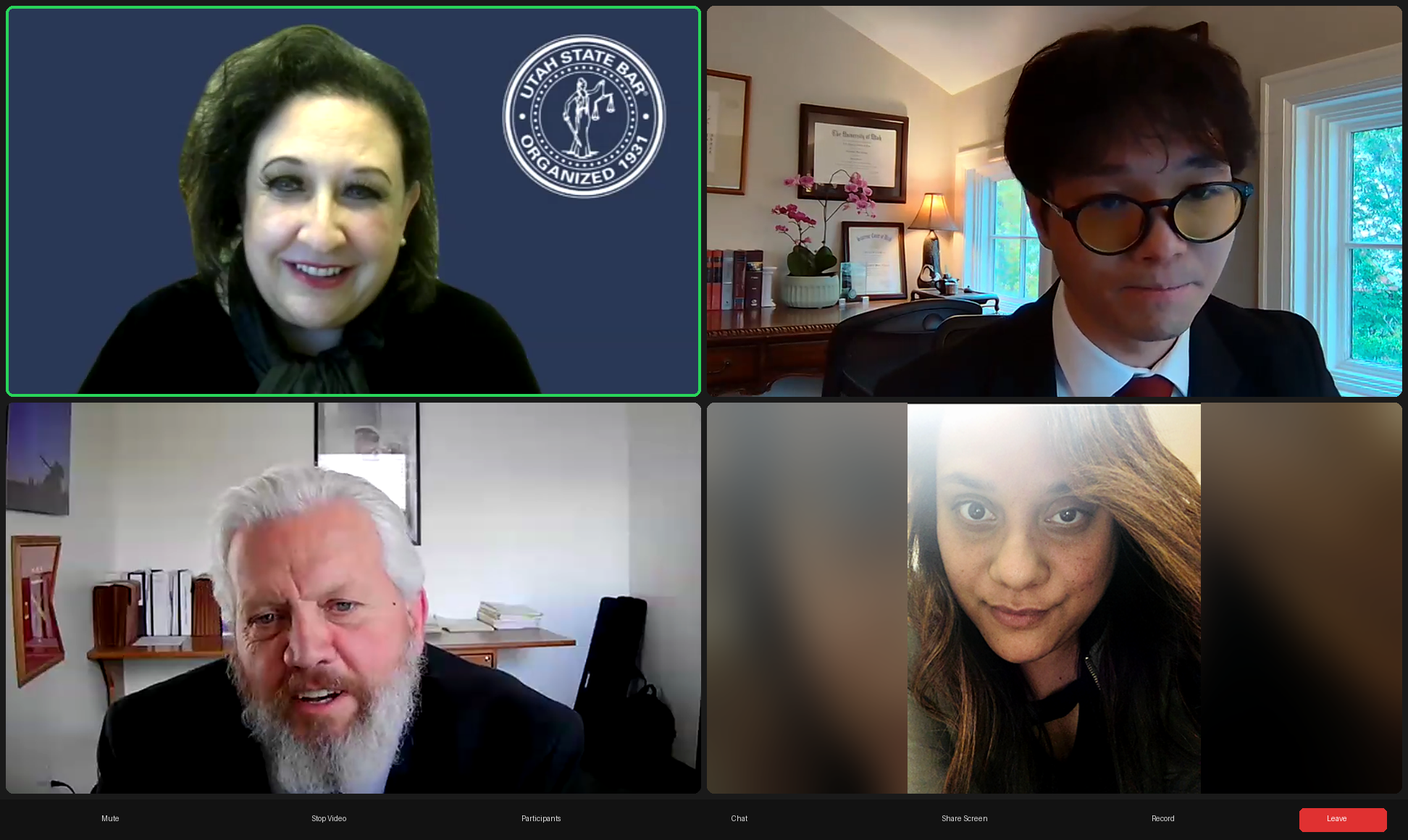
In a newly released video interview, Bar Communications Director Jennifer Weaver, Veteran Helena Bloomfield, Volunteer Attorney Alex Chang, and Utah@EASE Director Larry Schmidt discuss how the program works, the legal challenges veterans face, and why even a brief consultation with an attorney can have a meaningful impact.
A Legal Question That Led to a Resolution
After serving eight years in the military, Helena Bloomfield encountered a financial dispute that left her uncertain about her legal options.
Through a referral connected to the Supportive Services for Veteran Families (SSVF) program, Helena learned about Utah@EASE and contacted Schmidt for assistance.
She was connected with volunteer attorney Alex Chang, who helped her understand the legal issues involved and evaluate her options.
Helena described Chang as responsive, knowledgeable, and someone she felt comfortable turning to with questions.
Her legal matter has since been resolved.
Reflecting on the experience, Helena encouraged other veterans not to delay seeking legal guidance when questions arise.
“If you have a question, ask,” she said.
Her experience illustrates how access to legal advice can help individuals address civil legal problems before they become more complicated.
Addressing the Civil Legal Needs of Veterans
Utah@EASE connects eligible veterans and service members with Utah attorneys willing to provide pro bono legal assistance.
The program was developed through collaboration involving the Utah State Bar, Utah Department of Veterans and Military Affairs, and Utah Attorney General’s Office.
Unlike many legal aid programs, Utah@EASE does not base eligibility on income. Instead, qualifying military service is central to the program’s eligibility requirements.
The program assists with designated civil legal matters, including:
- Debt collection and financial disputes
- Housing-related legal issues
- Wills and estate planning
- Consumer protection and predatory lending
- Certain immigration matters
- Protections under the Servicemembers Civil Relief Act (SCRA)
- Employment and reemployment protections under the Uniformed Services Employment and Reemployment Rights Act (USERRA)
The program also helps connect veterans with government agencies that address consumer fraud and predatory lending.
Schmidt emphasizes that legal assistance fills an important gap in services available to veterans.
By connecting individuals with qualified attorneys, Utah@EASE helps veterans better understand their legal rights, responsibilities, and available remedies.
Pro Bono Representation: A Manageable Commitment with Meaningful Results
For attorneys interested in pro bono service, time commitments and administrative responsibilities can present barriers to volunteering.
Chang explains that Utah@EASE helps reduce those barriers by handling much of the preliminary client intake and case screening.
This allows volunteer attorneys to focus on the legal questions presented.
In Bloomfield’s case, Chang spent less than an hour discussing the matter and her options.
He notes that individuals involved in debt collection and housing disputes frequently appear in court without representation because the cost of hiring an attorney may be disproportionate to the amount at issue.
For someone unfamiliar with the legal system, understanding a complaint, procedural requirements, potential defenses, or settlement options can be challenging.
A consultation with an attorney can provide important clarity.
“Just having somebody there to briefly explain … what are my options alone is already a great help to many of these people,” Chang said.
His experience demonstrates how limited-scope legal assistance can help address unmet civil legal needs while allowing attorneys to contribute their professional expertise within manageable time commitments.
Utah@EASE Seeks Additional Volunteer Attorneys as Demand Grows
Demand for Utah@EASE services has increased substantially since the program began.
According to Schmidt, Utah@EASE started in 2018 with 18 volunteer attorneys and more than 100 annual inquiries.
In 2026, the program anticipates exceeding 500 inquiries and has expanded its volunteer network to 93 attorneys.
Despite that growth, the need for legal assistance remains significant, particularly in communities where access to attorneys may be limited.
Schmidt regularly participates in outreach efforts across Utah, including rural communities, to educate veterans about available legal resources.
The Bar’s Access to Justice Office supports these efforts through its partnership with Utah@EASE, including volunteer attorney recruitment and awareness of available services.
With 93 participating attorneys, the program is seeking seven additional volunteers to reach 100.
For Utah attorneys considering pro bono opportunities, Utah@EASE provides a structured way to assist veterans with civil legal matters while contributing to the profession’s broader commitment to access to justice.
Expanding Access to Justice Through Legal Service
The partnership between the Utah State Bar and Utah@EASE demonstrates how coordinated pro bono programs can help address gaps in civil legal services.
By combining volunteer attorneys, administrative support, and outreach to eligible clients, the program helps make legal assistance available to individuals who might otherwise navigate complex legal matters without professional guidance.
For Bloomfield, access to an attorney helped resolve a financial legal issue and provided greater confidence in moving forward.
For Chang, volunteering offered an opportunity to apply his legal knowledge in service of someone who needed it.
Their experience reinforces an important principle: Access to justice does not always require extensive representation. Sometimes, a single legal consultation can make a meaningful difference.
Learn More or Volunteer
Veterans and service members: Learn about Utah@EASE eligibility, covered civil legal matters, and how to request assistance.
Utah attorneys: Consider joining the Utah@EASE volunteer network to help meet the growing demand for civil legal assistance.
For program information and contact details, go to Utah@EASE or contact the Bar’s Access to Justice Office.
*AI was used to summarize the video for this blog.