
Utah State Bar hosts Part 2 of ‘Let's Talk, Let's Listen’ CLE series on judiciary, balance of powers
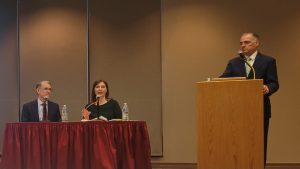
SALT LAKE CITY, (March 17, 2026) — The Utah State Bar hosted Part Two of its continuing legal education (CLE) dialogue series, Let’s Talk & Let’s Listen, featuring Utah Supreme Court Justice Paige Petersen and Ron Gordon, court administrator for the Administrative Office of the Utah State Courts. Moderated by Keith A. Call of Spencer Fane, the program drew significant participation, with nearly 900 legal professionals joining online and 50 attendees, including members of the judiciary and legal community, participating in person at the Utah Law & Justice Center.
The program included an overview of the recent legislative session, which included a significant number of bills directly and indirectly affecting the judiciary. Addressing recent commentary on judicial decisions, Petersen noted that the courts’ role is often misunderstood in broader public discussions.
“We issue our opinions and then remain largely silent, so much of the public discussion isn’t always focused on what we actually said. I would hope the conversation centers on the legal issues we addressed, because our role is not to create law, but to interpret the constitution and apply it to the cases before us,” Justice Petersen said.
The discussion built upon themes introduced in Part One of the series, turning focus to the judiciary’s constitutional role, recent legislative developments affecting the courts, and the ongoing importance of maintaining a proper balance of powers among Utah’s three branches of government.
“The purpose of this series is to create space for thoughtful, informed dialogue about the roles of our co-equal branches of government,” said Bar President Kim Cordova. “Public understanding of the judiciary’s role has never been intended to be politicized or viewed as a threat to the legislative or executive branches. These conversations are essential to reinforcing confidence in our constitutional framework and ensuring that each branch can fulfill its responsibilities with integrity and independence.”
Panelists addressed both the operational and constitutional implications of recent legislative developments, including the addition of new judgeships, changes to judicial processes, and the administrative demands placed on Utah’s courts.
Justice Petersen provided insight into the judiciary’s role in interpreting and applying the law, emphasizing that judicial review is a fundamental responsibility of the courts and a key component of the constitutional system of checks and balances. She underscored the importance of an independent judiciary that decides cases based solely on the law, without influence from external pressures.
Gordon discussed the practical realities of implementing legislative changes within the court system, noting that while many interactions between the judiciary and legislature are collaborative and productive, there are circumstances in which proposals may raise concerns about judicial independence or resource allocation. He emphasized that the judiciary remains committed to working constructively with the other branches while fulfilling its constitutional obligations.
“Most of the time, our interactions with the Legislature work the way you would hope they would. We share concerns and feedback, and often legislators listen and make changes that reflect those discussions,” Gordon said.
Throughout the discussion, panelists highlighted the importance of civility, professionalism, and continued engagement among lawyers, judges, and policymakers. They also pointed to ongoing efforts by the judiciary to improve public access and understanding, including outreach initiatives designed to demystify court processes and strengthen public trust.
“Bringing these perspectives together in a professional forum allows for a more complete understanding of the challenges and responsibilities facing each branch,” said moderator Call. “It reinforces the shared commitment within the legal community to uphold the rule of law and to engage in these important conversations with clarity and respect.”
About the Utah State Bar
Established in 1931 and operating under the authority of the Utah Supreme Court, the Utah State Bar regulates and supports the legal profession in the state. With more than 12,000 licensed attorneys, the Bar is committed to promoting a justice system that is accessible, understood, valued, and respected. Governed by a Commission of elected attorneys from Utah’s judicial districts, the Bar provides resources, education, and support to enhance the professional practice of its licensees and upholds the public’s trust in the legal system.
###